A common question families ask is, “At what age is someone truly considered elderly?” The answer may seem straightforward, but it is more complex than just turning a number. Understanding when a person is considered elderly is crucial, especially for families planning home care services for their elderly loved ones. Age affects eligibility for government schemes, healthcare needs, and even how societies view and support older adults. More importantly, identifying the right stage ensures timely support, allowing seniors to live with dignity and independence.
Global Perspectives: What Age is Officially Considered Elderly?
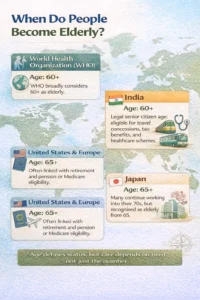
The World Health Organisation (WHO) broadly categorises people aged 60 and above as elderly, while in many Western countries, the threshold is often 65 years, coinciding with retirement and pension benefits.
Different regions define the elderly in their own way:
- In India, individuals above 60 years of age are considered senior citizens, entitling them to special schemes, travel concessions, and healthcare benefits.
- United States & Europe: Generally, 65+ is considered elderly, aligning with retirement age and Medicare eligibility.
- Japan: Once the country with one of the youngest retirement ages, Japan now categorises 65+ as elderly, though many continue working actively into their 70s.
Culturally, however, age is not just a number. In India and many Asian countries, elders are respected as knowledge bearers. This cultural perspective influences how elder care is approached across societies.
Senior Citizen Age in India: Legal Definition and Benefits
In India, a senior citizen is legally defined as anyone aged 60 years and above, as recognised by the Income Tax Act and the Maintenance and Welfare of Parents and Senior Citizens Act. Once a person turns 60, they become eligible for key government benefits such as higher tax exemption limits, railway and bus travel concessions, priority healthcare services, pensions for eligible individuals, higher interest rates on savings schemes, and legal protection for maintenance. Individuals aged 80 and above are classified as super senior citizens for additional tax benefits.
Important Life Stages That Mark the Beginning of Elderly Age
Certain milestones mark the journey into being considered elderly:
- Retirement: Formal retirement often begins at 60 in India.
- Government Schemes: Senior citizen concessions on travel, healthcare subsidies, and tax benefits typically start at these ages.
- Health and Independence: As people age, maintaining independence can become challenging due to declining mobility, vision, and stamina, which are common characteristics of old age.
Signs That Indicate Someone Is Elderly
While chronological age is a guide, the real signs of being elderly appear in daily life:
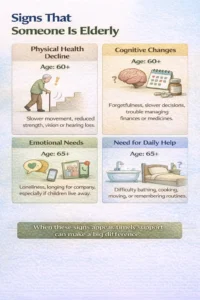
- Physical Health Decline: Slower mobility, reduced strength, vision or hearing loss.
- Cognitive Changes: Forgetfulness, slower decision-making, or difficulty managing finances.
- Emotional Needs: Seniors may feel lonely or crave companionship, especially if children live far away.
These signs often indicate when additional support, whether from family or professional caregivers, becomes necessary.
What Age is Considered Elderly for Elder Care Services at Home
In the context of home-based elder care, age is less important than functionality and independence. A 70-year-old may live fully independently, while a 62-year-old with chronic illness may need assistance.
- “Senior Citizen” vs Elderly in Care: A “senior citizen” usually refers to someone who has crossed 60 and is eligible for benefits, while “elderly” often refers to older adults who need care support in daily activities.
- Care Needs Trigger: When a person struggles with bathing, cooking, mobility, or remembering medication, home elder care services become crucial.
- Role of Caregivers: Professional attendants, nurses, and companions help bridge this gap, allowing elders to stay at home safely.
Elder Care at Home: Services That Support Ageing Adults
Home elder care services are designed to adapt to individual needs, providing:
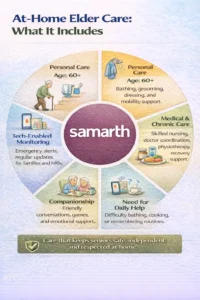
- Personal Care: Bathing, grooming, dressing, and mobility support.
- Medical Care: Skilled nursing, physiotherapy, and post-surgery recovery.
- Companionship: Friendly conversations, games, and emotional support.
- Nutrition Management: Meal planning, dietary monitoring, and feeding assistance.
These services ensure that ageing does not compromise quality of life.
Factors That Influence When Someone Needs Elder Care Services at Home
Not everyone needs elder care at the same age. Several factors accelerate or delay the need:
- Chronic Illnesses, Diabetes, arthritis, or heart disease, can limit independence.
- Cognitive Decline: Conditions like dementia and Alzheimer’s increase care needs, often affecting memory and daily functioning in the elderly.
- Family Availability: If children live abroad or far away, professional care becomes essential.
- Preference for Ageing at Home: Many elders wish to remain in familiar surroundings instead of institutional care.
Benefits of Home-based Elder Care
Home elder care offers several advantages over assisted living facilities:
- Maintains Independence: Seniors can live life their way, with support where needed.
- Familiar Surroundings: Being at home reduces anxiety and disorientation.
- Personalised Attention: One-on-one care ensures individual needs are met.
- Cost-Effectiveness: Often more affordable than long-term institutional care.
These benefits make home care a preferred option for many families.
Conclusion: Age Is Just a Number in Elder Care
While governments and cultures may define “elderly” by age 60, 65, or beyond, the real marker is need, not number. Elder care should be tailored to a person’s lifestyle, health, and emotional well-being. Services at home allow older adults to age gracefully, with dignity, independence, and companionship. Ultimately, the question is not “How old is considered elderly?” but rather “What support does my loved one need to live well?”
If you’re exploring reliable elder care services for your parents or loved ones, Samarth can help you plan the right support at home, personalised to their needs and delivered with care, dignity, and trust.
Get Care Support For Your Parents
FAQ
1. What age is legally considered elderly?
Legally, many countries consider those 60 years and above as elderly or senior citizens. In India, this is when benefits, concessions, and pension schemes apply, while in the US and Europe, the age is often 65.
2 At what age should families start considering elder care services at home?
Families should consider elder care services not by a fixed age but by observing needs. If an older adult struggles with mobility, forgets medication, or feels lonely, it may be time to introduce professional support, whether they are 62 or 75.
3. How do cultural differences affect the definition of elderly?
Cultural views greatly influence when someone is seen as elderly. In India, 60+ is considered elderly, while in the US and UK, it is often 65+. In Japan, with longer life expectancy, some consider 70+ elderly.