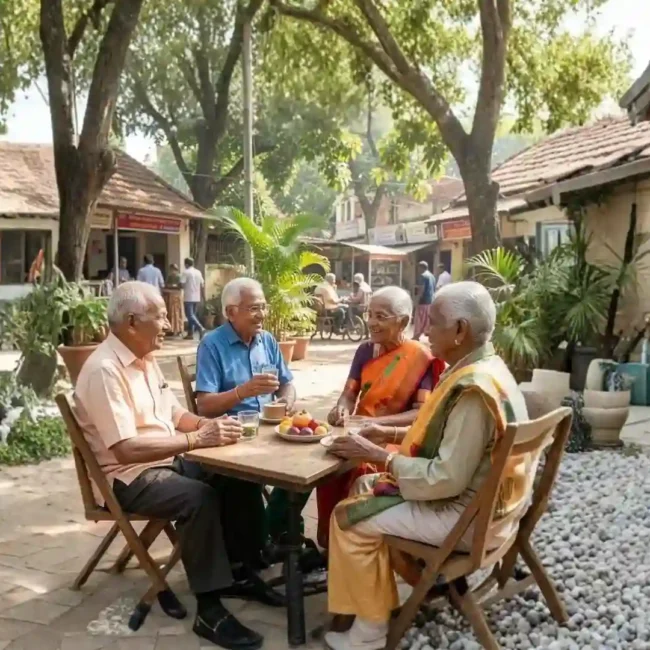

Imagine this. Your parents are at home in Delhi, with the familiar household helper bustling about. Meals are cooked. The house stays tidy. Yet a quiet worry lingers. Are they truly cared for, or just assisted? If you live away, like so many of us do, that doubt can weigh heavily.
A household staff care circle for the elderly changes that. It turns everyday helpers into a reliable support network. No more guilt over distance. Just calm clarity.
What Is a Household Staff Care Circle for Elderly?
A household staff care circle for elderly is simple. It is your parents’ helpers, trained and aligned, forming a gentle safety net at home.
Think of the shift. Helpers often focus on tasks: cooking, cleaning. A care circle adds responsibility. They notice if Mum skips her walk. They spot Dad’s quiet fatigue.
This honours your parents’ dignity. They stay in their home, surrounded by familiar faces. Continuity brings comfort, especially in home-based elderly care in India, where family ties run deep.
Why a Household Staff Care Circle for Elderly Needs Structure
Without structure, good intentions falter. Untrained staff might miss a medication cue. Or overlook a slip on the floor.
Emotional gaps hurt too. Helpers feel unsure. Parents sense the uncertainty. Medical risks grow quietly.
Clarity eases this. It is not about control. It is about shared understanding. Everyone breathes easier when roles feel natural.
The World Health Organization’s guide on healthy ageing reminds us: supportive environments prevent isolation. Structure builds that.
Training Household Staff Without Overwhelming Them
Start small with training household staff for elderly care. Share daily routines. “Mum takes her tablet after breakfast. Dad rests at 3 pm.”
List key steps: medications, fall checks, emergency numbers. Keep it written and simple. Our blog on creating a health file for elders offers a free template to make this effortless.
Focus on consistency. Praise their efforts. They learn best when feeling supported, not pressured.
Setting Boundaries in a Household Staff Care Circle for Elderly
Boundaries protect everyone in setting boundaries with caregivers at home.
Define roles clearly. “Please help with meals and light chores. For medical advice, call the family doctor.” This keeps staff from overstepping, avoiding burnout.
Respect flows both ways. Value their time off. Ensure your parents’ privacy. It prevents overdependence.
The NHS guide to caring for adults at home stresses balance. Clear lines safeguard safety and dignity.
Building Trust Through Small Daily Actions
Trust grows in how to manage caregivers for ageing parents through everyday habits.
Check in weekly via WhatsApp. “How was today? Any changes?” Share updates too. Transparency bridges the distance.
Include them gently. A festival sweet shared. A thank-you note. These moments build connection.
Over time, uncertainty fades. You rest easier knowing they watch with care.
Appreciation Is Not Extra. It Is Essential
Helpers give much. Appreciation fuels them.
Simple gestures matter. A steady salary. A kind word: “You make home brighter.” Festival bonuses show you notice.
This creates loyalty. They stay longer, care deeper. Emotional motivation turns tasks into true support.
When to Strengthen the Care Circle with Professional Support
Sometimes needs outgrow routines. A new health issue. Nights that feel too long.
This is when partners like Samarth step in softly. They support your household staff care circle for elderly, adding trained eyes without replacing familiar faces.
Samarth’s “Care Like Son & Daughter” ethos fits seamlessly. They train, guide, and ensure smooth days. Families tell us it lifts the quiet load.
You build the circle. They help it thrive.
Your heart is in the right place. Distance does not diminish love. A structured care circle brings calm, dignity, and trust. Your parents flourish at home. And you find peace, wherever you are.