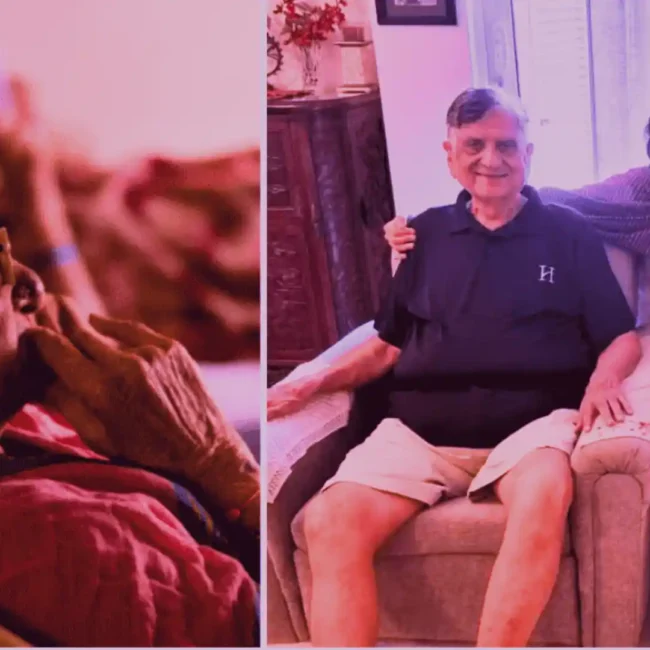
You set everything up carefully.
A daily video call.
Medication reminders.
Maybe even a smartwatch or emergency alert system.
On paper, it looks like you have done everything right. And yet, after every call, a quiet doubt remains. Are they really okay?
This is the part no one prepares you for. Monitoring your parents remotely is not just about staying connected. It is about understanding what is happening in the spaces between those connections.
A five-minute call can hide an entire day. A calm voice can cover up discomfort, confusion, or loneliness. Technology can show you activity. It cannot always show you reality.
Many NRI families begin with tools and devices. Over time, they realise that while these tools are helpful, they are only one part of the system.
Because care is not just data, it is context.
Video Call Strategies That Actually Show How They Are Doing
Most remote monitoring starts and ends with video calls. They feel reassured because you can see your parents, hear their voice, and check in regularly.
But the way you structure these calls makes all the difference. A quick call with general questions often leads to predictable answers.
Everything is fine.
No issues.
All okay.
And the deeper realities remain unspoken.
Move Beyond Routine Questions
Instead of asking broad questions, shift toward specific ones that reveal patterns.
Ask about:
- What they ate during the day
- Whether they stepped outside
- How did they sleep the previous night
- If they spoke to anyone recently
These questions help you understand daily rhythms, not just surface responses.
Observe Without Making It Obvious
While talking, gently observe:
- Are they walking comfortably
- Do they seem more tired than usual
- Are they repeating themselves
- Is their mood consistent
Observation often reveals what words do not.
Let Conversations Breathe
Do not rush calls.
Sometimes, the most important things come up after a pause. When your parents feel unhurried, they are more likely to share small concerns that would otherwise stay hidden.
Pay Attention to the Environment
The home itself can offer signals:
- Are medicines lying unopened
- Is the kitchen being used regularly
- Does the space look organised or neglected
These cues help you understand how daily life is unfolding.
Over time, these small observations build a clearer picture than any single update.
Fall Detection and Emergency Alert Devices Available in India
One of the biggest fears for families is a fall or sudden emergency when no one is around. This is where technology plays an important role.
Common Options
- Wearable SOS devices such as pendants or wristbands
- Smartwatches with fall detection features
- Mobile-based emergency alert apps
- Home sensors that detect inactivity
These tools can:
- Send alerts to family members
- Trigger emergency calls
- Share location details in urgent situations
What Works in Real Life
Devices are only effective if they are used consistently.
Many seniors:
- Forgot to wear them
- Find them uncomfortable
- Remove them during the day
Charging is another common issue. A device that is not charged cannot help in an emergency.
Choosing the Right Approach
Keep it simple.
Choose a device that:
- Is easy to wear
- Requires minimal interaction
- Fits naturally into their routine
Technology can reduce response time in emergencies. But it cannot prevent every risk. It should be seen as a layer of safety, not a complete solution.
Medication Reminder Tools
Medication management is one of the most common areas where small lapses can lead to bigger problems.
A missed dose. A repeated dose. A confused schedule. These are easy to overlook and difficult to detect remotely.
Available Solutions
- Mobile apps with reminder alerts
- Automated pill dispensers
- Basic alarm systems with labelled instructions
- Blister packs organised by day and time
What Actually Works
The most effective systems are often the simplest ones. Complicated apps can feel overwhelming, especially for seniors who are not comfortable with technology.
A straightforward routine is more reliable:
- Fixed timing
- Clear labelling
- Minimal steps
The Hidden Gap
Even with reminders, there is one thing technology cannot confirm. Whether the medicine was actually taken.
An alarm can ring. A notification can appear. But it cannot ensure compliance. This is where human oversight becomes important.
The Limits of Technology: What It Misses
Technology creates visibility. But it has limits. It can track movement, reminders, and alerts. It cannot interpret behaviour, emotion, or intent.
It will not tell you if:
- Your parent skipped a meal because they felt low
- They are feeling anxious but do not want to worry you
- They are confused about a doctor’s instructions
- They are avoiding certain activities due to fear or discomfort
A step count may look normal. But it does not tell you how they felt during those steps. A video call may feel reassuring. But it does not show you the hours before or after.
Many families rely heavily on digital signals. Over time, they realise that the absence of alerts does not always mean everything is fine.
Technology captures events. It does not capture experiences. And when you are far away, that difference matters.
The Human Layer: A Care Manager as Your Eyes and Ears
This is where the role of a care manager becomes critical. A care manager brings something that technology cannot. Presence.
They see your parents in their natural environment. Not just during a scheduled call, but in the flow of their daily routine.
What They Observe
- Changes in appetite
- Shifts in mood or behaviour
- Mobility challenges
- Signs of confusion or forgetfulness
- Adherence to medication and routines
These are subtle indicators. They are easy to miss remotely. But they often signal early changes that need attention.
Why This Matters for NRIs
When you live abroad, you are working with limited visibility.
You are interpreting short interactions and trying to fill in the gaps.
A care manager reduces those gaps.
They provide grounded, real-world insights. Not assumptions.
They help you move from reacting to problems to anticipating them.
How Samarth’s Reporting Works
Samarth is designed to bring structure to what often feels unstructured.
Instead of scattered updates and uncertainty, you receive clear and consistent information.
What You Receive
- Regular updates on your parent’s health and daily routine
- Observations about emotional well-being and behaviour
- Alerts when something changes or needs attention
- Coordination with doctors, diagnostics, and services
The Difference
This is not just reporting.
It is interpretation.
You are not left wondering what an update means or whether something is serious.
You have a care team that understands your parent and communicates context, not just information.
For You, As an NRI
This creates a sense of continuity.
You are not dependent on occasional calls or second-hand updates.
You have a reliable, structured view of how your parents are doing.
And when something changes, you know early.
Monitoring Is Not About Watching It Is About Understanding
It is natural to feel that monitoring means checking frequently.
More calls. More apps. More alerts.
But more does not always mean better.
What actually reduces anxiety is clarity.
Knowing:
- What is normal
- What has changed
- And what needs attention
Monitoring is not about control. It is about confidence.
When systems are in place, you are not constantly questioning whether everything is okay.
You have visibility that feels steady and reliable.
Balancing Independence and Support
One of the most important aspects of remote monitoring is preserving your parents’ independence.
Indian parents, especially, value self-sufficiency deeply.
If monitoring feels intrusive, they may resist it.
If it feels supportive, they accept it.
How to Approach This
- Involve them in decisions about tools and systems
- Explain the purpose as safety, not control
- Respect their preferences and routines
- Introduce changes gradually
The goal is not to manage their lives.
It is to support them in living independently, with the reassurance that help is available when needed.
Creating a System That Actually Works
Remote monitoring works best when it is not dependent on a single method.
It is a combination of:
- Regular, meaningful communication
- Simple and reliable technology
- Clear routines and systems
- Human oversight and support
Each layer fills the gaps left by the others.
Together, they create a system that feels complete.
Get Weekly Care Updates on Your Parent
If you are relying only on calls and apps, you are carrying the responsibility of monitoring alone.
And that can be exhausting.
Samarth helps you build a structured support system that includes:
- On-ground care managers
- Regular, meaningful reporting
- Real-time coordination when needed
So you are not guessing how your parents are doing.
You are informed.
You are prepared.
And most importantly, you can shift from constant worry to quiet confidence.
Get weekly care updates with Samarth.