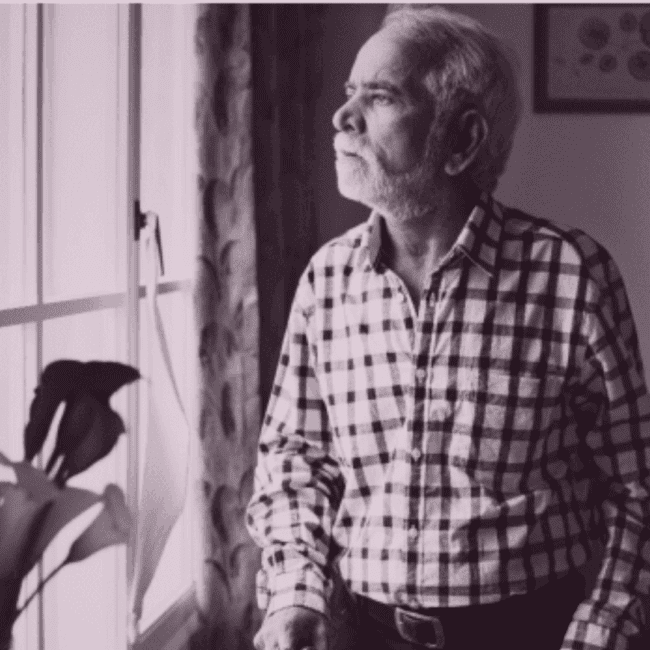
You call your mother on a Sunday afternoon. She sounds fine. But when you ask what she did over the weekend, the answer is the same as last week, and the week before that. Nothing much. Stayed home. Watched some TV.
You ask about the neighbours she used to visit, the temple she never missed, the evening walks she looked forward to. She brushes it off. “It’s too hot.” “My knees have been acting up.” “I don’t feel like it these days.”
You hang up and sit with a quiet unease you cannot fully explain. She is not unwell. She is not upset. But something feels different, smaller, somehow. And from where you are sitting, thousands of miles away, you are not sure what to do, or even whether you are overreacting.
You are not overreacting. What you are picking up on has a name. And it matters more than most people realise.
What Social Withdrawal in Elderly Parents Actually Looks Like
Social withdrawal rarely announces itself. It does not arrive with a diagnosis or a dramatic moment. It creeps in quietly, one skipped outing, one unanswered invitation, one afternoon that becomes a habit of staying in.
For NRI children, this is especially difficult to catch. You are not there to notice that the neighbours have stopped dropping by, or that your father no longer steps out for his morning walk. You rely on phone calls, and parents, especially of that generation, rarely volunteer worry. They protect you from it. They say they are fine because they do not want to be a burden, and because they have spent a lifetime not asking for things.
What makes it harder is that withdrawal can look like contentment from the outside. A parent who stays home, keeps to themselves, and asks for very little can seem settled and peaceful. But stillness and peace are not always the same thing. One comes from within. The other is sometimes what happens when the world starts to feel like too much effort.
Some signs to watch for across your regular calls and visits include your parent mentioning fewer people in conversation, a loss of interest in things they once looked forward to, a quieter or flatter tone than usual, increasing reluctance to make or keep plans, and a growing sense that their world is shrinking to the four walls of their home.
Why This Happens And Why It Is Not Simply Old Age
It is easy to dismiss social withdrawal as a natural part of getting older. It is not. While some slowing down is normal, a meaningful retreat from social life is almost always a response to something specific, and it deserves attention rather than acceptance.
Grief is one of the most common triggers. The loss of a spouse, a close friend, or even a sibling can leave a parent feeling that the social fabric of their life has been pulled away. Without the person who used to accompany them, familiar activities can feel hollow or simply too painful to return to.
Chronic pain and mobility challenges also play a significant role. When stepping out requires managing aching knees, unpredictable bladders, or the fear of falling on an uneven road, it is easier to simply stay home. Over time, staying home becomes the default, and the outside world starts to feel unfamiliar.
There is also the quieter, often unspoken reality of depression in older adults. In India, mental health conversations remain difficult for this generation. Many elderly parents would never identify what they are experiencing as depression. They might call it tiredness, or disinterest, or simply say they are not in the mood. But underneath, there may be a sadness that has gone unnamed and untreated for longer than it should have.
Understanding the root cause matters because the response to grief looks very different from the response to pain, which looks very different from the response to depression. Before offering solutions, it is worth sitting with the question of what is actually driving the withdrawal.
How NRI Children Can Still Spot the Signs From Abroad
Distance does not make you powerless. It just means you have to listen differently, to what is said, and more importantly, to what is not.
You are closer to the situation than you think. A shift in your parents’ energy on calls, a growing disinterest in things they once loved, a quieter voice, shorter answers, less laughter, these are signals worth taking seriously. Pay attention to consistency over time rather than any single conversation. One quiet week means little. A pattern of quiet weeks means something.
It also helps to build a small network of people who are physically present in your parents’ life a relative who visits occasionally, a trusted neighbour, a domestic helper who notices things. Not to spy, but to have someone who can offer you a ground-level view that a phone call cannot provide.
7 Ways to Understand and Gently Reopen Your Parents’ World
1. Notice the Pattern, Not Just the Mood
One quiet week is not a warning sign. A pattern of quiet weeks is. Start paying attention to consistency. Are they mentioning fewer people, fewer outings, fewer activities over time? Keep a loose mental note of what they talk about across calls. Change often reveals itself in the gap between what they used to say and what they say now. You are looking for drift, not drama.
2. Ask Differently
“How are you?” almost always gets “fine.” Try asking something more specific instead. “Did you speak to anyone today?” or “What does your afternoon usually look like these days?” or “When did you last go out somewhere you enjoyed?” Specific questions open doors that general ones keep closed. They also signal to your parent that you are genuinely curious about their life, not just checking that they are alive.
3. Understand the Root Before Offering the Fix
Social withdrawal in elderly parents is rarely just about not wanting to go out. It is often a response to something deeper, grief, chronic pain, fear of falling, low confidence after an illness, or a quiet depression that has gone unnoticed. Before you suggest solutions, try to understand what is underneath. Ask gently. Listen without rushing to reassure or problem-solve. Sometimes being heard is the first step toward wanting to re-engage.
4. Reconnect Them to One Thing, Not Everything
It is tempting to create a whole social plan once you recognise the problem. Resist that impulse. Reengagement works best when it starts small and feels familiar rather than effortful or imposed. Think of one activity they genuinely enjoyed before, a bhajan group, a park they liked, a neighbour they were fond of, a hobby they have quietly set aside. Helping them return to one meaningful thing is far more effective than overwhelming them with a schedule they did not ask for.
5. Involve Someone They Already Trust
Your parent is unlikely to respond warmly to a suggestion that feels like it is coming from a concerned child managing them from abroad. But they might respond naturally to a sibling, a close friend, or a neighbour who invites them out as a matter of course. Think about who in their life has that kind of organic access and genuine warmth, and gently loop that person in. The goal is for your parent to feel invited, not organised.
6. Make Technology Feel Like Connection, Not Obligation
Video calls, voice notes, shared photos, and even watching something together over a call can reduce the emotional distance your parent feels, and loneliness is often what drives withdrawal in the first place. But it only works when it feels like love, not like a welfare check. Send them a voice note just to say you were thinking of them. Share something funny that reminded you of them. Make the call feel like a visit, not a report card.
7. Take It Seriously Before It Becomes a Crisis
Social isolation in older adults is linked to faster cognitive decline, increased risk of depression, weakened immunity, and deteriorating physical health. What begins as a preference for staying home can quietly become something much harder to reverse. The longer the withdrawal goes unaddressed, the more entrenched it becomes, and the harder reengagement feels to your parent. Acting early, even with small, gentle steps, is always better than waiting until the withdrawal has deepened into something that requires far more intervention.
Keeping Your Parents Empowered, Not Managed
The goal is never to fill your parents’ calendar or tell them how to spend their time. It is to make sure that if they are pulling away from the world, it is a genuine choice, and not a slow surrender driven by pain, loneliness, or a quiet sadness that has gone unacknowledged.
Indian parents of this generation often carry a great, quiet pride. They will not ask for company. They will not admit to loneliness easily, if at all. They have spent their lives being the ones who hold things together, and accepting support, even from their own children, can feel uncomfortable. Approaching this with gentleness, patience, and genuine curiosity will always matter more than any specific strategy or plan.
You are not trying to fix them. You are trying to make sure the door to the world stays open, and that they feel safe, seen, and loved enough to walk through it again.
How Samarth Helps NRI Families Navigate Social Withdrawal
For children living abroad, one of the hardest things about social withdrawal is that you cannot see it happening in real time. You are working from incomplete information, phone calls that last twenty minutes, and a growing sense that something is not quite right, but you cannot put your finger on it.
At Samarth, our care companions do more than assist with daily tasks or medical appointments. They are trained to notice emotional and social shifts, a parent who has become quieter, more reluctant to engage, or who seems to be retreating from the routines that once gave their day meaning and pleasure. These observations are shared with families in clear, structured updates, so you are never left piecing things together from fragments of conversation.
Where appropriate, our team gently facilitates social reengagement, accompanying parents to familiar community spaces, helping them reconnect with activities they once enjoyed, and ensuring they have a consistent, warm human presence in their day. We understand the cultural nuance of working with Indian elders, their pride, their hesitation, and the specific way trust needs to be built before they will open up.
For NRI children, this means the peace of knowing that someone who genuinely cares is paying close attention to your parents’ world, not just their health and safety, but the quality and fullness of their daily life.
Being Far Away Does Not Mean Being Absent
Social withdrawal is quiet. It does not call for help. It does not send an alert or show up on a medical report. It just slowly makes the world a little smaller, one skipped outing, one cancelled plan, one afternoon indoors at a time.
But you noticed. Across time zones, across the limits of a phone call, across the distance that sits between you and the home you grew up in, you noticed that something had changed. And that noticing is its own form of love.
You do not need to be in the same room to help your parent find their way back to the world. You need to keep asking the right questions, keep listening beyond the words, keep making sure they know that even from far away, you see them, not just as someone to be kept safe, but as someone whose life deserves to be full.
Because that is what care truly looks like. Not just keeping them alive. Keeping them alive to life.