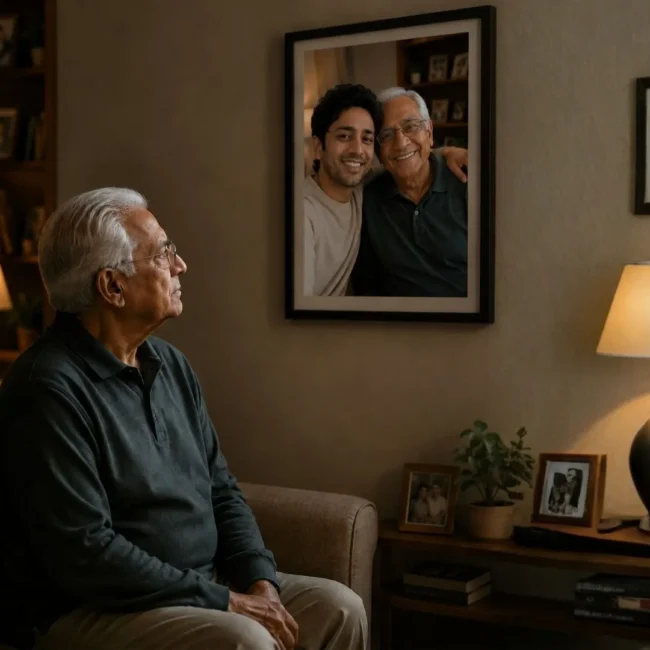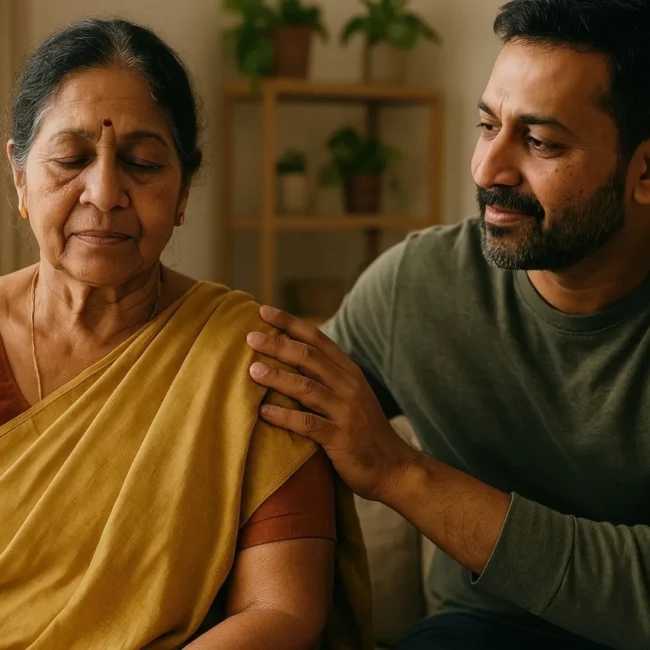
The WhatsApp call comes at 3 AM your time. It’s your mother, asking if you’ve eaten dinner. You reassure her, hang up, and lie awake wondering why she sounds so worried lately. Three days later, your father sends a message about a minor ache that won’t go away, asking if you think he should see a doctor.
If you’re an NRI with elderly parents in India, these moments might feel familiar. What looks like overreaction or stubbornness from the outside is often anxiety on the inside. And when you’re thousands of miles away, it’s easy to misread worry as neediness or independence as isolation.
This isn’t about dismissing their concerns or managing them from afar. It’s about understanding what’s really happening beneath the surface and finding ways to respond that actually help.
Why Anxiety Is Hard to Spot From Abroad
Distance doesn’t just create physical separation. It makes it harder to read the emotional temperature of your parents’ lives. A five-minute video call can hide hours of silent worry. A cheerful voice can mask days of restless nights.
Indian parents, especially from older generations, rarely name their anxiety outright. They’ll ask repetitive questions, offer unsolicited advice, or insist on updates about your day, not because they’re being intrusive, but because small rituals of connection help them feel less powerless.
And when you’re juggling time zones, work pressures, and your own family, it’s easy to interpret these signs as nagging rather than anxiety. This isn’t a personal failure. It’s the reality of loving someone from a distance.
What Drives Anxiety in Elderly Parents in India
Anxiety in ageing parents isn’t just about getting older. It’s a response to real, tangible changes happening around them and within them. Understanding these triggers helps you respond with empathy instead of frustration.
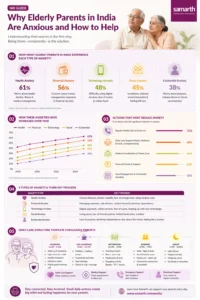
1. Health Anxiety: When the Body Feels Unpredictable
Every new ache feels like it could be something serious. A missed pill, a dizzy spell, a blood sugar reading that’s slightly off. These aren’t minor inconveniences when you’re in your 70s. They’re reminders that the body is no longer entirely reliable.
Indian healthcare can feel overwhelming for elderly patients navigating multiple specialists, conflicting advice, and unclear diagnoses. When children aren’t there to accompany them to appointments, that uncertainty turns into anxiety. They worry about whether they understood the doctor correctly, whether they’re taking the right dose, and whether they should be more concerned than they are.
The anxiety deepens when they compare themselves to friends who are managing chronic conditions or recovering from surgeries. Every neighbourhood gathering becomes an informal health forum, where stories of diagnoses and treatments circulate. These conversations, while well-intentioned, can fuel worry about their own health trajectory and what might be coming next.
2. Financial Anxiety: The Fear of Running Out
Many elderly parents in India live on fixed incomes. Pensions, savings, or support from children. Even when money isn’t tight, the fear of outliving their resources is real. Medical emergencies, rising costs, and unexpected expenses amplify this worry.
For parents who value independence, asking children for financial help feels like a loss of dignity. So they don’t ask. Instead, they worry quietly, cut corners, or delay necessary purchases. This silent stress builds, especially when they don’t have clear visibility into what’s affordable and what isn’t.
The Indian context adds another layer. Parents who spent their working years prioritising their children’s education and weddings often retire with less saved than they’d hoped. Inflation, changing family structures, and longer life expectancies mean their money needs to stretch further than previous generations. The math creates constant background anxiety, even on good days.
3. Technology Anxiety: Feeling Left Behind
The world has gone digital, and elderly parents are expected to keep up. Online banking, telemedicine consultations, OTPs, and app-based bookings. What feels intuitive to you can feel alienating to them. Fear of making a mistake, losing money, or being scammed creates genuine anxiety.
This isn’t about intelligence. It’s about a generational gap in technological fluency. When parents depend on children to navigate digital systems, but children aren’t available in real time, that gap becomes a source of stress. They want to stay connected and self-sufficient, but the tools to do so feel intimidating.
4. Social Anxiety: Shrinking Circles and Loneliness
Friends move away, pass away, or face their own health challenges. Neighbours change. Communities that once felt close become quieter. Elderly parents in India often experience profound loneliness, even in cities surrounded by people.
For parents whose children live abroad, this isolation is compounded by time zone differences and infrequent visits. They may hesitate to burden friends with their worries or feel embarrassed to admit they’re lonely. The anxiety of being forgotten, of becoming irrelevant, sits just beneath the surface of everyday life.
Social connections that once came naturally. Temple visits, market trips, and evening walks with neighbours. These become harder with mobility challenges or changing neighbourhood dynamics. The effort required to maintain friendships increases just as energy levels decrease. This creates a vicious cycle where isolation fuels anxiety, and anxiety makes reaching out feel even more daunting.
5. Existential Anxiety: What Happens Next?
Ageing brings with it questions that don’t have easy answers. What if I fall and no one’s home? What if I can’t manage on my own anymore? What if something happens to my spouse? These aren’t abstract fears. There are real possibilities that elderly parents think about, sometimes daily.
In India, where multigenerational living was once the norm, the shift toward nuclear families and migration has left many elderly parents without built-in safety nets. The anxiety isn’t just about health or money. It’s about what comes next when they can no longer do everything themselves.
How to Respond in a Way That Helps, Not Dismisses
Understanding anxiety is one thing. Knowing how to respond from abroad is another. Here’s how to support your parents without minimising their feelings or taking over their lives.
1. Validate Their Feelings Before Offering Solutions
When your parent shares a worry, resist the urge to immediately fix it. Start by acknowledging what they’re feeling. “That does sound stressful”, or “I can see why that would worry you” goes further than jumping straight to problem-solving. Anxiety thrives in dismissal. It eases the validation.
2. Ask What Would Help Them Feel More In Control
Instead of assuming what they need, ask. “Would it help if we scheduled a call with your doctor together?” or “Do you want me to look into options for that?” gives them agency. Often, just knowing that help is available if they want it reduces the anxiety itself.
3. Create Small Rituals of Connection
Predictability reduces anxiety. A weekly video call at the same time, a daily good morning message, or a standing phone date gives your parents something to count on. It’s not about the duration. It’s about the reliability. Knowing you’ll connect consistently creates emotional security that eases the fear of being forgotten.
These rituals don’t need to be elaborate. A five-minute check-in before your workday starts, a Sunday lunch call that’s sacred regardless of other plans, or even a shared habit like watching the same show and discussing it afterwards. These small touchpoints create rhythm in what can otherwise feel like an unpredictable expanse of distance.
4. Simplify Where You Can, Without Infantilising
If technology is causing stress, help them set up auto-pay for recurring bills or show them how to use voice commands. If navigating healthcare feels overwhelming, write down key questions they can bring to their next appointment. Simplifying systems doesn’t mean taking over. It means removing unnecessary friction so they can focus on what matters.
5. Encourage Low-Stakes Social Engagement
Loneliness fuels anxiety. Gently encourage your parents to reconnect with old friends, join a local club, or attend community events. If mobility is an issue, help them explore virtual options. Online spiritual gatherings, Zoom-based hobby groups, or phone check-ins with distant relatives. Connection is one of the best antidotes to existential worry.
The Role of Structured Daily Care in Reducing Anxiety
One of the most effective ways to reduce anxiety in elderly parents is to introduce gentle structure into their daily lives. This isn’t about rigid schedules or micromanagement. It’s about creating predictability in the areas where uncertainty breeds worry.
A structured care routine might include regular medication reminders, pre-scheduled grocery deliveries, weekly health check-ins, or even a daily call from a trusted companion. When parents know what’s coming and when, the mental load of decision-making decreases. They’re not constantly wondering if they forgot something or if they should be doing something differently.
For NRI children, this structure also provides peace of mind. You’re not relying on sporadic updates or hoping everything’s okay. You have visibility into their routine, which means you can spot changes early and respond proactively rather than reactively.
Keeping Your Parents Empowered, Not Dependent
There’s a fine line between supporting your parents and taking over their lives. Indian parents, especially those who’ve spent decades caring for others, resist the idea of becoming dependent. Their anxiety often stems not just from practical challenges, but from the fear of losing autonomy.
The goal isn’t to do everything for them. It’s to create systems that allow them to continue making their own choices while having support when they need it. This means involving them in decisions, respecting their preferences, and framing help as a partnership rather than a rescue.
When your parents feel seen, heard, and respected, their anxiety decreases. When they feel managed or sidelined, it increases. The difference is in how you communicate and collaborate, not just in what you do.
How Samarth Helps NRI Families Manage Elderly Parents’ Anxiety
For NRI children trying to support anxious parents from abroad, the challenge isn’t just emotional. It’s logistical. You can’t be there for the small daily reassurances that ease worry. You can’t accompany them to appointments, remind them about medications in real time, or simply check in during the moments when anxiety peaks.
Samarth bridges that gap by providing on-the-ground daily care support for elderly parents across India. This includes regular companion visits, medication management, health monitoring, assistance with errands, and coordination with healthcare providers. For parents struggling with technology, Samarth’s care team helps with digital tasks. Booking appointments, managing online payments, or simply troubleshooting a stuck app.
For children living abroad, Samarth offers real-time visibility into their parents’ routine. You receive updates, know when they’ve taken their medication, and have a reliable point of contact in India who can respond immediately if something feels off. It’s not about replacing you. It’s about extending your care into the everyday moments when you can’t be physically present.
Most importantly, Samarth’s approach respects your parents’ independence. The goal is to support, not manage. To ease anxiety, not create dependence. To give both you and your parents the peace of mind that comes from knowing help is always available, without anyone feeling like they’ve lost control.
Distance Doesn’t Mean Absence
Being thousands of miles away doesn’t make you any less of a devoted child. Understanding your parents’ anxiety, really understanding it, is the first step toward responding in ways that actually help.
You can’t eliminate every worry. You can’t reverse the passage of time or undo the distance. But you can create systems, build connections, and offer support that makes the weight of their anxiety a little lighter. And sometimes, that’s exactly what they need most.
Care isn’t measured in proximity. It’s measured in presence, consistency, and the willingness to meet your parents where they are. Even when where they are is a place of fear you can’t fully fix, only hold.