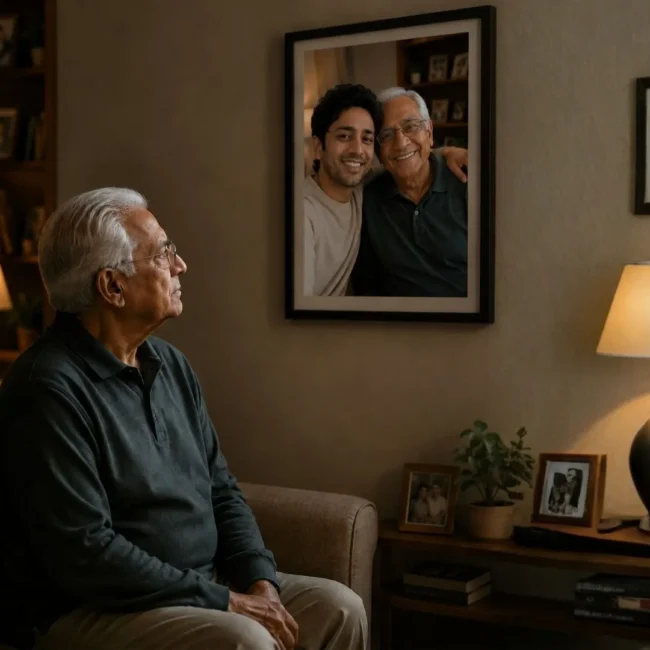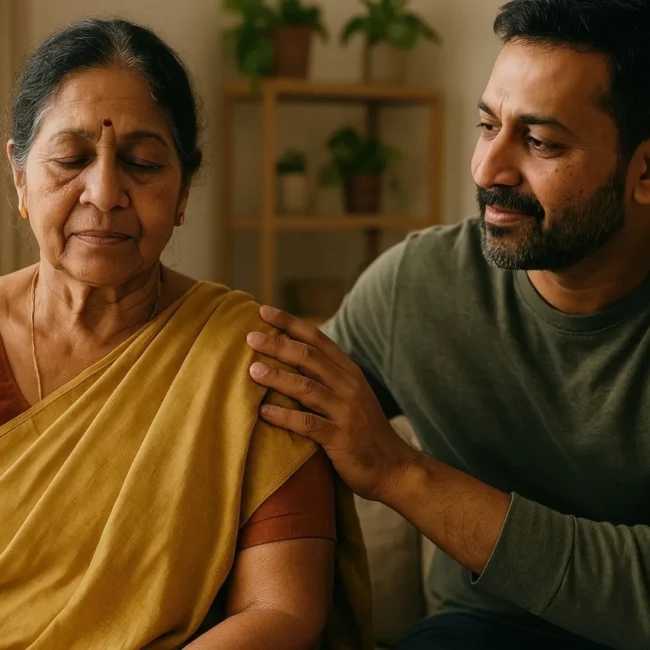
The call comes at 1 AM. Your father has had a fall. Your mother is on the line, calm in the way she always is when she is actually frightened. You are in New Jersey, ten and a half hours behind, with a work presentation in six hours and an H1B visa that makes flying out on impulse a calculation rather than a reflex. Your parents are in Kothrud, in the flat they have lived in for thirty years, and they are not going anywhere. This is the situation that elder care services in Pune exist to address, and this guide is written for the family on the other end of that call. It covers the types of care available, what they actually cost in 2026, the legal preparation most NRI families delay too long, and how to choose and manage care from the US with confidence rather than anxiety.
Why Pune Is One of India’s Best Cities for Ageing Parents
Pune has genuine advantages for elderly residents worth acknowledging before the challenges. The climate is considerably more forgiving than Mumbai’s humidity or Delhi’s extremes. Winters are mild, summers are manageable, and the monsoon, while significant, does not produce the waterlogging that makes other cities dangerous for seniors with limited mobility.
The hospital infrastructure is strong. Jehangir Hospital, Ruby Hall Clinic, Deenanath Mangeshkar Hospital, and Sahyadri Hospital represent a genuinely capable medical ecosystem, with specialist coverage that many smaller Indian cities cannot match. For NRI families anxious about emergency response, Pune’s hospital density across the western and central parts of the city provides meaningful reassurance.
Neighbourhoods like Baner, Aundh, Balewadi, Kothrud, and Koregaon Park have developed elder-friendly characteristics: walkable in parts, well-connected, with growing concentrations of elder care services in Pune that reflect the city’s ageing demographic. Organisations such as NRIPO (Non-Resident Indians Parent Organisation) provide community support and a point of contact for NRI families navigating care from abroad.
The Real Emotional Challenges NRIs in the US Face
The practical obstacles of managing elder care for parents in India from the USA are well documented. The emotional ones are less often discussed honestly.
Your parents say they are fine. They have been saying this for two years, through the fall they did not mention for three weeks, through the medication they quietly discontinued because it made them feel unwell, through the neighbour who moved away and the social circle that has been quietly shrinking. They are not lying. They genuinely do not want to worry you. They also genuinely need more support than they are asking for, and the gap between those two facts is where most NRI families live.
There is often sibling tension between the child abroad and the one in India managing things on the ground, or between siblings all abroad with different assessments of what is needed and different levels of guilt driving their positions. There is the cultural weight of the words “care home,” which carry a particular stigma in Maharashtrian families even when the facility in question is a thoughtfully designed senior living community. There is the exhaustion of being a working parent in the US, managing school runs and visa renewals and time-off calculations, whilst simultaneously trying to be a responsible child to someone ten and a half hours away who needs more than a weekly video call. Naming these pressures is the starting point for making clear-eyed decisions rather than reactive ones.
Types of Elder Care Services Available in Pune
Home Care and Attendant Services
In-home attendants remain the most common form of support for elderly parents in Pune and the starting point for most NRI families. Arrangements range from part-time daily visits to full 24-hour live-in care, with 12-hour shift structures the most common for parents who are largely independent but need assistance with meals, mobility, and daily tasks. Marathi-speaking caregivers are strongly preferred by many Pune-based parents for reasons of cultural familiarity and communication comfort, a detail worth raising explicitly with any agency. Providers of home care services for senior citizens in Pune include both large agencies with standardised processes and smaller independent operators, each with different trade-offs in cost, oversight, and flexibility.
Home Nursing and Post-Hospitalisation Care
When a parent returns from Jehangir or Deenanath Mangeshkar following surgery or a significant health event, the gap in care is most acute. Hospital discharge in India often happens quickly, and the clinical support that would follow in a US or UK setting, such as structured home nursing visits, wound checks, and medication management, is not automatically arranged. A trained home nurse fills this role: managing chronic conditions, administering medications, monitoring recovery indicators, and communicating meaningfully with the treating physician. For NRI families who cannot fly in for every discharge, this category of care is not optional.
Assisted Living and Senior Living Communities
Pune’s senior living market has developed significantly, and several communities now accommodate NRI family involvement through remote admission processes, video walkthroughs, and regular digital updates. Athashri Baner, Epoch Balewadi, and Madhurbhav are amongst the communities that have built infrastructure for families who cannot be physically present during assessment. Senior living in Pune at the better end of the market offers maintenance-free accommodation, on-site medical support, structured social activity, and nutritional oversight, which represents a meaningful upgrade for parents whose current living situation is becoming difficult to manage safely.
Dementia and Memory Care
Specialised memory care remains the most underserved category in Pune’s elder care market, but dedicated units with trained staff, appropriate safety features, and structured daily routines are available. For NRI families, cognitive decline presents a particular challenge: it is often most visible during visits, when the pattern of confusion and repetition becomes impossible to dismiss. Acting on those observations rather than attributing them to tiredness or stress before flying back to the US is one of the most consequential decisions NRI families face.
Care Concierge and Coordination Services for NRI Families
This is the category most elder care writing fails to explain adequately. Care concierge services, offered in Pune by providers including Samarth, Anvayaa, Care247, and Madatnis, are not caregiving services in the conventional sense. They are managed coordination: a professional layer that accompanies your parent to appointments, manages medication refills, coordinates with specialists, provides structured weekly updates to the family, and functions as a local proxy for decisions that would otherwise require you to be physically present. For NRI families, this is frequently the highest-value service available because it closes the information gap, giving you an accurate and current picture of your parents’ situation rather than the edited version they choose to share.
Emergency Response Services
Pune’s emergency response infrastructure for elderly residents includes ambulance-on-call services, wearable emergency alert devices, and priority admission arrangements that can be pre-registered with designated hospitals. Ruby Hall and Jehangir both have international patient services that can function as a communication channel during hospitalisation. Establishing your parents’ designated hospital, pre-registering their medical history, and ensuring that someone with the authority to make decisions is reachable at any hour are the foundations of any emergency plan.
Real Cost of Elder Care in Pune (2026 Pricing)
Understanding costs clearly is essential for NRI parent care in Pune, where prices span a wide range depending on care level, location within the city, and whether the family is working through an agency or arranging independently.
| Type of Care | Monthly Cost (INR) | Approx. USD |
| Part-time home attendant | ₹8,000 – ₹15,000 | ~$95 – $180 |
| Full-time trained attendant | ₹15,000 – ₹25,000 | ~$180 – $300 |
| Trained home nurse | ₹25,000 – ₹40,000 | ~$300 – $480 |
| 24/7 live-in care | ₹35,000 – ₹60,000 | ~$420 – $720 |
| Care concierge / NRI coordination | ₹6,000 – ₹18,000 | ~$72 – $215 |
| Assisted living (standard) | ₹20,000 – ₹50,000 | ~$240 – $600 |
| Premium senior living | ₹60,000 – ₹1,20,000+ | ~$720 – $1,440+ |
| Dementia/memory care | ₹40,000 – ₹80,000 | ~$480 – $960 |
Price differences are driven by the caregiver’s training and experience, agency versus independent hire, location within Pune, and the intensity of medical versus non-medical support required. One-time costs to budget for include security deposits of one to two months, medical equipment such as a hospital bed, commode chair, and wheelchair, and any home modifications for accessibility. Hidden ongoing costs include festival-day overtime and replacement caregiver fees during leave periods.
Legal and Financial Preparation Every NRI Should Complete
This is the area most NRI families defer until after the first crisis, at which point the gaps become acutely visible.
A Power of Attorney is the foundational document. There are two types: a general PoA granting broad authority over financial and legal matters, and a specific PoA limited to defined transactions. Both need to be notarised via the Indian Consulate or Embassy in the US and registered in India. Without this, managing property transactions, operating bank accounts, or making certain medical decisions on your parents’ behalf from abroad is not straightforward.
Medical consent documentation is separate from PoA and should establish in writing who is authorised to make medical decisions if your parent is incapacitated. This should be shared with the designated hospital in advance, not produced for the first time during an emergency admission.
Joint accounts or NRO accounts allow you to transfer funds for care expenses without significant delay. Knowing your parents’ existing account details, insurance policy numbers, and premium payment dates is basic preparation that is frequently overlooked until something goes wrong.
Organise one accessible emergency document file, both physical and digital, containing Aadhaar, PAN, property documents, insurance policies, medical records, and the contact details of the treating physician, designated hospital, and local emergency contact. Any family member, in any time zone, should be able to locate and use this information within five minutes of needing it.
How to Choose the Right Elder Care Provider in Pune from the US
Start with an honest needs assessment: what does your parent actually require versus what they acknowledge needing? Distinguish between medical and non-medical needs, physical and emotional support, and the level of independence they currently have versus the level they project on calls.
Verify providers remotely with rigour. Ask for police verification documentation for individual caregivers, confirm agency registration, and request references from NRI families, specifically those who have managed care from abroad and can speak to the communication quality as much as the care quality. A video walkthrough of any residential facility is non-negotiable before committing.
Review contracts carefully. Pay attention to cancellation terms, replacement policies when a caregiver leaves, and what is included in the stated monthly cost versus what appears as additional charges. International payment options should be confirmed explicitly, as not all Indian providers are set up to receive payments from US bank accounts cleanly.
Red flags to watch for include no written contract offered, cash-only payment demands, resistance to unannounced family visits, vague caregiver credentials, and pressure for large advance payments before services begin.
Questions to Ask Every Pune Provider Before Hiring
- What medical credentials does the caregiver hold, and can documentation be provided?
- What is your replacement policy if the assigned caregiver is absent, and how quickly is a replacement arranged?
- Do you have experience with NRI families, and can you provide references from families based in the US?
- Can I pay from a US bank account, and what are the transfer and billing arrangements?
- What is your emergency protocol, including which hospital, which doctor, and who makes decisions if the family cannot be reached?
- How often will I receive updates, in what format, and through whom?
- What is included in the monthly fee, and what triggers additional charges?
- What is the notice period and process if I need to end the arrangement?
How to Involve Your Parents in the Decision
Pune-based parents resist professional care for reasons that deserve respect rather than circumvention. Independence matters to them. They do not want to be a burden. Frame initial support as companionship rather than care: someone to accompany them to appointments, share meals, or help with the grocery run. Start with part-time arrangements that feel manageable. Involve the family doctor, whose recommendation often carries more weight than a child’s. Let your parent meet and form an opinion of the caregiver before the hire is confirmed. The goal is a decision they feel they have participated in, not one that has been made for them.
Your First 30 Days: Setting Up Elder Care from the US
Week one: conduct thorough video calls with your parent and any local contacts who can give you an honest picture of the current situation. Identify the three most pressing needs and shortlist three providers based on initial research and the questions above.
Week two: arrange in-person assessments through a trusted local contact, whether a relative, a family friend, or a professional care coordinator who can visit each provider and report back honestly. Complete reference checks and narrow to one preferred provider and one backup.
Week three: confirm the hire, establish monitoring infrastructure, create a family WhatsApp group that includes the care coordinator, and conduct an introductory video call between you and the caregiver. Ensure all emergency documentation is in place and accessible.
Week four: review honestly. Has communication been as promised? Is your parent comfortable? Are there gaps between what was agreed and what is being delivered? Adjust early, before patterns become entrenched.
When the first emergency occurs after care is in place, your role is to be informed and supported rather than the sole coordinator of a crisis from ten and a half hours away. That shift, from managing everything alone to being kept meaningfully informed whilst professionals handle the ground situation, is what good elder care in Pune makes possible.
Frequently Asked Questions
How much does elder care cost per month in Pune for NRI families?
Monthly costs range from approximately ₹8,000 for part-time attendant support to ₹1,20,000 or more for premium senior living with full medical oversight. Most NRI families typically spend ₹25,000 to ₹60,000 per month combining a trained attendant or nurse with a care coordination plan, roughly $300 to $720 USD, though one-time set-up costs and equipment should be budgeted separately.
How can I hire a trustworthy caregiver in Pune from the USA?
Work through a registered agency rather than an independent hire wherever possible. Ask for police verification documentation, confirm the agency’s registration, and request NRI-specific references you can speak to directly. Arrange an introductory video call with the caregiver before confirming the hire and insist on a written contract with clear terms before any payment is made.
How do I hire a trustworthy caregiver in Pune from abroad?
The process requires a local proxy, someone who can conduct the in-person assessment on your behalf. A trusted relative, a professional care coordinator, or an NRI-focused service like Samarth can serve this role. Combine their on-the-ground assessment with your own remote verification through video calls, reference checks, and contract review before committing.
Can I pay Pune elder care providers from my US bank account?
Most established agencies in Pune now accommodate international transfers, typically via wire transfer to an NRO or business account. Confirm the payment method explicitly before signing any contract, as some smaller providers are not set up for this. Care concierge services focused on NRI families generally have a cleaner international payment infrastructure by design.
Conclusion
Caring for ageing parents in Pune from the US is one of the more quietly demanding things that NRI life asks of people. The distance is real, the time difference is unforgiving, and the emotional weight of not being present does not diminish with time or professional success. Elder care services do not replace your presence. They build a system of support that functions when you cannot be there, which is most of the time.
The families who navigate this well are not the ones who worry most. They are the ones who plan earliest, before the crisis becomes the moment of reckoning. That planning is available to you now. The right time to begin it is before you need it.