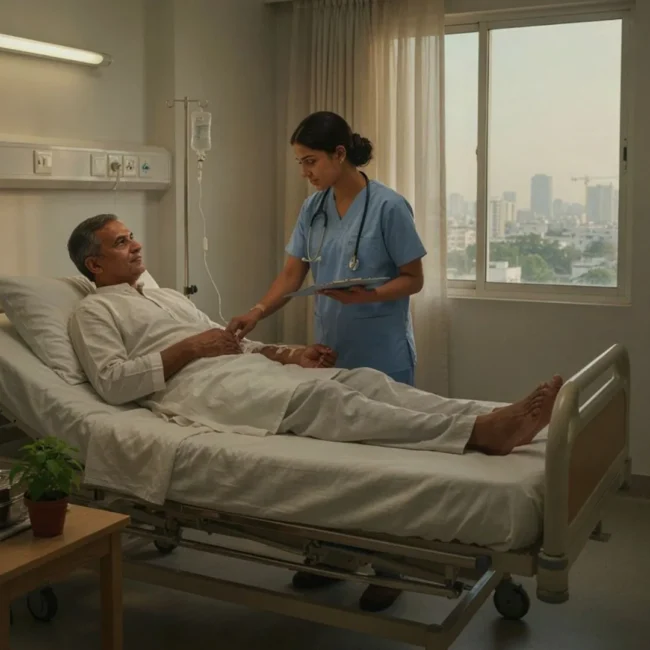
Anjali had the tab open for eleven days before she called her mother. Her father had passed the year before, her mother was alone in their DLF Gurgaon flat, and after a small fall in the kitchen, Anjali’s brother in Delhi had started saying, gently at first and then not so gently, that maybe it was time to “look at a facility.” So Anjali, from her apartment in Austin, started searching for assisted living in Delhi NCR late at night, scrolling through websites quoting anywhere from Rs 35,000 a month to over Rs 2,50,000, with no clear sense of what actually separated one number from the other, or whether a facility was even the right call to begin with.
Most families researching this arrive at the same place Anjali did – a wide, confusing price range, a list of facilities that all sound reassuring in their marketing copy, and an unspoken question nobody’s quite asked yet: does her mother actually need to leave home? This guide covers what assisted living in Delhi NCR involves, how it’s priced across the region’s different zones, which facilities are established and known for what, and when professional home care is the better answer.
What Assisted Living Actually Means in the Delhi NCR Context
The term is used loosely across Delhi NCR, so it’s worth being precise. Assisted living is residential care for seniors who need help with daily activities but don’t require full-time hospital-level support. Properly run, it includes 24-hour staffing, a structured care plan, support with meals, medication management, bathing, housekeeping, and mobility, along with on-site or on-call medical support and organised engagement activities.
In India, the term is often conflated with old age homes, senior care homes, and retirement communities, and the distinction matters more than it seems. The defining feature of genuine assisted living is 24-hour staffing paired with a formal, individualised care plan – a retirement community or senior apartment building, however nice, doesn’t meet that bar even if it’s marketed as one. The Delhi NCR assisted living market itself spans several distinct cities – Delhi, Gurgaon, Noida, and Faridabad – each with a different cost base, different hospital proximity, and noticeably different facility quality, which is part of why the price range looks so wide at first glance.
What Most Parents in Delhi NCR Actually Want
Before any cost table or facility comparison, it’s worth sitting with something research keeps confirming: the large majority of elderly parents in India want to stay in their own home. Their own flat, their own routine, the neighbourhood they’ve lived in for decades – none of that transfers to even a well-run facility. Assisted living in Delhi NCR, however good the operator, means a new place, a shared schedule, unfamiliar faces, and a loss of ownership over the small daily decisions that make a life feel like one’s own.
For a parent in Defence Colony, Vasant Kunj, or DLF Gurgaon who has lived independently for twenty or thirty years, that adjustment isn’t a minor inconvenience – it’s often a genuine health risk in its own right. The right way into this decision is asking the parent what they actually want, and then matching the care model to their real medical needs, not the other way around. Most families researching facilities don’t get this far before they start comparing prices. This guide is built to help with both.
Assisted Living Cost in Delhi NCR (2026): Zone by Zone
The ranges below are general market context to help you plan, not fixed quotes from any specific facility – treat them as brackets to sanity-check what you’re being told, not a price you can expect to lock in.
South Delhi
South Delhi has some of the NCR’s most established assisted living facilities, largely because of proximity to AIIMS, Safdarjung Hospital, Fortis Vasant Kunj, and Max Saket. Standard assisted living here runs Rs 35,000 to Rs 80,000 a month, and the area’s advantage is less about premium amenities and more about long operating histories and strong track records – a real consideration if hospital connectivity and facility reputation matter more to your family than a hospitality-style experience. The Second Inning Home in Vasant Kunj and Panchvati Home in Tughlakabad are established, more affordable options within this range.
Gurgaon
Gurgaon is the NCR’s most developed assisted living micro-market, with newer, purpose-built facilities, several built to international care home standards, and major hospital chains – Medanta, Artemis, Fortis – within close reach of most locations. Costs here run considerably higher, typically Rs 90,000 to Rs 2,00,000 a month, reflecting both the facility quality and the density of premium operators.
That premium tier includes several names worth knowing. Antara Care Homes in DLF Phase 2, part of the Max Group, runs personalised care plans with a clinical assessment before admission, offers rehabilitation and post-surgery care, and takes both short and long-term stays, with twin-sharing starting around Rs 1,50,000 a month. NEMA Elder Care in Palam Vihar specialises in luxury dementia and assisted living with NRI-specific communication protocols and structured family updates – a genuinely useful detail for families managing this from abroad. Gracias Living offers personalised care with dementia and post-operative support under 24-hour medical supervision. Epoch Elder Care has operated since 2012 with a person-centred approach and a specific focus on dementia care. Aurum Senior Living in South City 2 runs a hospitality-first model with proximity to Medanta and Fortis. This tier generally suits families with higher budgets, or parents with complex medical or dementia needs that genuinely require that level of care.
Noida and Greater Noida
Noida and Greater Noida offer comparable quality at meaningfully lower cost – typically 20 to 30 per cent less than equivalent Gurgaon facilities, with a general range of Rs 40,000 to Rs 1,00,000 a month. Antara Care Homes also operates here with the same personalised care model. Dua Old Age Caring Institution in Noida runs a medical-first facility specialising in stroke, dementia, Alzheimer’s, paralysis, and post-ICU care – a strong fit for families where complex medical need, not lifestyle preference, is driving the decision. Apollo Hospital Noida provides solid emergency backup for facilities in the area.
What’s Actually Included – and What Isn’t
Most Delhi NCR facilities bundle accommodation, three meals a day, housekeeping, laundry, and basic recreational activities into the headline monthly rate. What’s usually billed separately is easy to miss until the first invoice: medicines and medical consumables, physiotherapy and rehabilitation sessions, specialist doctor consultations, incontinence supplies, and in some cases, personal care staff above the facility’s standard ratio. Dementia care specifically adds another Rs 15,000 to Rs 30,000 a month over the base rate at most facilities.
There are one-time costs worth flagging too – a security deposit, typically Rs 50,000 to several lakhs and usually but not always refundable, and non-refundable admission fees at some facilities. The headline monthly rate rarely tells the full story, which is why it’s worth requesting a fully itemised quote before comparing any two facilities.
What Assisted Living Cannot Give Your Parent
Even a well-run assisted living facility in Gurgaon, whatever it advertises, cannot give a parent their own flat. It cannot give them the morning routine they’ve followed for forty years, the specific view from their own window, or the building watchman who’s known them since their children were in school. These aren’t sentimental details – they’re the texture of a person’s actual daily life, and they don’t survive a move.
Shared schedules, institutional routines, and unfamiliar environments have well-documented negative effects on elderly mental health, including depression, disorientation, and accelerated cognitive decline — particularly when the move wasn’t the parent’s own choice. Delhi NCR’s large, anonymous apartment complexes already contribute to isolation among elderly residents living independently. A facility that replicates that same anonymity, at a considerably higher monthly cost, isn’t always the improvement families assume it will be when they start the search. The question worth asking before any facility comparison isn’t which facility is best – it’s whether a facility is actually necessary given the parent’s current medical situation.
Why Professional Home Care Is Often the Better Answer
A managed home care service like Samarth gives a parent daily professional presence, qualified nursing, medication and appointment management, emergency response coordinated directly with hospitals, and structured updates to the family through the Samarth Care App – the same functional pieces a good assisted living facility offers, without requiring the parent to leave their flat, their neighbourhood, or the city they’ve spent decades in. That continuity of environment matters enormously for dignity and mental health in old age, in a way that’s easy to underweight when you’re deep in facility brochures and cost comparisons.
The cost case is worth laying out plainly too. Professional home care in Delhi NCR starts around Rs 18,000 to Rs 30,000 a month for companion-level care and scales to Rs 32,000 to Rs 80,000 a month for full 24-hour nursing. Compare that with standard assisted living at Rs 40,000 to Rs 1,00,000 a month before deposits and add-ons, and for most families, the numbers alone make a strong case for home care. But the more important point isn’t the savings – it’s that the clinical bar for genuinely needing assisted living is higher than most families assume when they start this search. A parent who needs help with daily activities but doesn’t have complex medical needs requiring round-the-clock institutional oversight is, in most cases, better served staying exactly where they are.
How to Evaluate Any Option From the US
Start with the parent’s actual medical needs, honestly assessed: does the condition genuinely require round-the-clock institutional clinical oversight, or can it be managed well by a qualified nurse and attendant at home? Then ask the parent what they want, and give that answer real weight rather than treating it as one input among many.
If you’re evaluating assisted living facilities specifically, arrange a proxy visit through someone you trust, request a trial stay of 7 to 14 days before committing long-term, get a fully itemised cost breakdown that includes every separately billed item, ask directly about NRI communication protocols, and confirm whether the same caregiver attends your parent consistently or the facility rotates staff. If you’re evaluating home care instead, verify caregiver credentials directly, ask about backup and replacement coverage, confirm the emergency escalation protocol in specific terms, and set up structured remote monitoring starting day one, not after something’s already gone wrong.
A few red flags apply regardless of which path you’re considering: cash-only payment requests, no written contract, vague or evasive answers about emergency handling, restricted family access to the parent, and no single named point of contact you can actually reach.
The Question That Actually Matters
The search for assisted living in Delhi NCR often ends not with a facility booked, but with a clearer question than the one you started with: does your parent need to leave home at all? For parents whose medical condition genuinely requires institutional-level 24-hour care, Delhi NCR offers a strong range of options across South Delhi, Gurgaon, and Noida, and this guide should give you a realistic starting point for that search. But for parents who need daily support without requiring round-the-clock clinical supervision – which describes most families who start this search – professional home care is almost always the better outcome, and a managed service like Samarth can provide it without uprooting your parent from the life they’ve built. Your parent built a life in their home. The right care should make it possible for them to stay there.
Frequently Asked Questions
How much does assisted living cost per month in Delhi NCR in 2026?
Costs vary significantly by zone and care level. South Delhi facilities generally run Rs 35,000 to Rs 80,000 a month, Noida and Greater Noida run Rs 40,000 to Rs 1,00,000, and Gurgaon’s premium facilities run Rs 90,000 to Rs 2,00,000 a month. Most facilities also bill separately for medicines, physiotherapy, specialist consultations, and dementia care, so always ask for a fully itemised quote.
What is the difference between assisted living and a nursing home in Delhi NCR?
Assisted living supports seniors who need help with daily activities but don’t require full-time hospital-level care, typically with 24-hour staffing and a structured care plan. A nursing home or nursing facility, by contrast, is built for patients with more intensive, ongoing medical needs requiring closer clinical supervision. The two terms get used interchangeably in India, so it’s worth confirming exactly what level of clinical support any given facility actually provides.
Is professional home care cheaper than assisted living in Delhi NCR?
Generally, yes. Professional home care typically starts around Rs 18,000 to Rs 30,000 a month for companion care and scales to Rs 32,000 to Rs 80,000 for full 24-hour nursing, compared with Rs 40,000 to Rs 1,00,000 or more for standard assisted living before deposits and add-ons. Beyond cost, home care also lets the parent remain in familiar surroundings, which matters for many families as much as the price difference does.
Can I arrange assisted living in Delhi NCR from the US without visiting?
It’s possible, but not advisable without some form of in-person verification. Arrange a proxy visit through a trusted contact, request a trial stay before committing long-term, and get a fully itemised cost breakdown in writing. Reputable facilities are generally used to working with NRI families and should be able to support this kind of remote evaluation process.