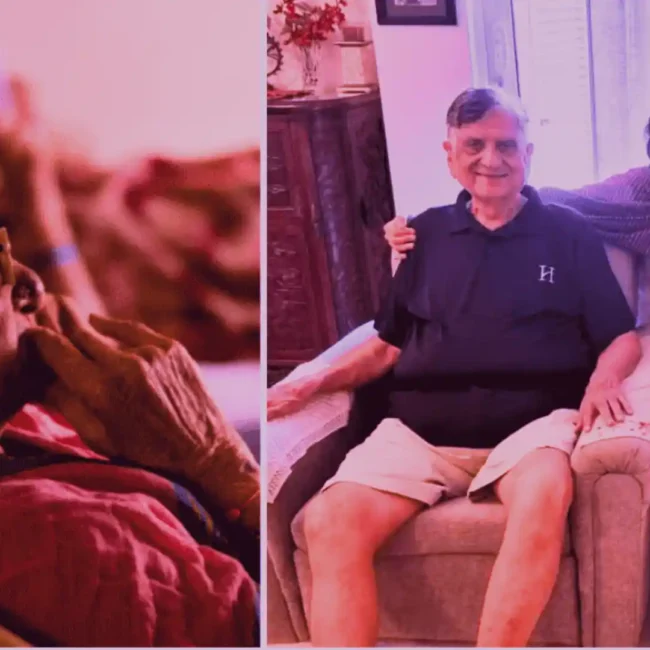
Meera got the call from her mother’s neighbour in Jayanagar on a Tuesday morning: her 68-year-old father had slipped in the bathroom, fractured his hip, and was already headed into surgery at Manipal. Meera was in Singapore. The surgery went fine. The harder part started three days later, when the surgeon said recovery would depend on daily physiotherapy for the next six weeks — and someone needed to figure out, fast, how a man who could barely stand was supposed to get to a clinic and back through Bangalore traffic every single day. That “someone” ended up being Meera, coordinating from nine time zones away, trying to make sense of physiotherapist quotes that ranged from Rs 700 to over Rs 2,000 a session with no clear reason why.
Her situation isn’t unusual. Families across Bangalore run into the same wall – a parent needs consistent, structured rehabilitation after surgery, a stroke, or a fall, and getting them to a clinic repeatedly just isn’t realistic. Home physiotherapy is almost always the right call in these cases, but pricing it out shouldn’t feel like guesswork. This guide breaks down the physiotherapy at home cost in Bangalore 2026, why the numbers vary as much as they do, and what’s worth checking before you commit to a provider.
Why Home Physiotherapy Is Often the Better Option in Bangalore
There’s a reason physiotherapists talk about consistency more than any single technique: recovery tracks closely with how regularly treatment happens. A patient who misses sessions or spaces them out because a 45-minute commute each way is too exhausting will typically recover more slowly than one who gets the same treatment on schedule at home. For an elderly patient specifically, the commute itself carries risk – getting in and out of a car, navigating a clinic’s stairs, all while still unsteady on their feet.
There’s a second advantage that’s easy to underestimate. A physiotherapist working in the patient’s actual home can see exactly what the recovery plan needs to account for – how high the bed is, whether the bathroom has anything to hold onto, how many steps lead up to the front door. None of that comes across in a clinic session, and the former tends to result in a rehab plan grounded in how the patient actually lives, rather than a generic protocol. Provider coverage for home physiotherapy has grown fairly consistent across the city, with active networks in Koramangala, Indiranagar, Whitefield, HSR Layout, Jayanagar, Marathahalli, Malleshwaram, Hebbal, Electronic City, and BTM Layout.
What Home Physiotherapy Actually Costs in Bangalore Right Now
The figures below reflect what’s typical across the Bangalore market in 2026, pulled together as a general benchmark rather than any one provider’s rate card. Use them as reference points to check quotes, not as a promise of what you’ll pay.
Standard Per-Session Rates
For a routine 45- to 60-minute session with a BPT-qualified physiotherapist, expect somewhere between Rs 800 and Rs 1,500. Within that range, pricing tends to cluster fairly predictably by the type of provider:
- Budget platforms and entry-level providers: Rs 699–899 per session
- Established, mid-range physiotherapists: Rs 1,000–1,500 per session
- Premium or MPT-qualified specialists: Rs 1,500–2,500 per session
The first session usually costs more than the rest – typically Rs 200 to 500 extra – because it’s a full assessment rather than a follow-up treatment, and that assessment is what the rest of the plan gets built on. If a session uses equipment such as a TENS unit or ultrasound therapy, that’s frequently billed as a separate line item too. It’s a small detail, but it’s the kind of thing worth asking about before the first invoice arrives, not after.
Where Packages Actually Save Money – and Where They Don’t
Very few families need just one or two sessions. That’s why most providers push package deals, and for anything running longer than a couple of weeks, they’re usually worth taking.
| Package | Typical duration | Savings vs. per-session rate |
| 10 sessions | 1–2 weeks | 8–12% |
| 20 sessions | 3–4 weeks | 12–18% |
| 30 sessions | 4–6 weeks | 15–20% |
| 45 sessions | 6+ weeks (chronic care) | 20–30% |
If a surgeon has prescribed 3 to 5 sessions a week for a month or two of post-operative recovery, a package will almost always beat paying session by session. Where families get caught out isn’t the pricing – it’s the fine print. Packages are usually condition-specific and non-transferable, so a plan bought for knee rehab won’t carry over if the treatment shifts. Refund and pause policies vary greatly between providers; ask about both before paying, not after a session gets missed for a medical reason.
Why Neurological and Geriatric Physiotherapy Cost More
Not every home physiotherapy session is priced the same, and the gap isn’t arbitrary – it tracks with what the job actually requires. Neurological physiotherapy, for conditions like stroke recovery, Parkinson’s, multiple sclerosis, or spinal cord injuries, needs a physiotherapist with an MPT and training that most general practitioners don’t have. That shows up in the price: from Rs 1,200 to Rs 2,500 per session is typical.
Geriatric physiotherapy is a related but distinct specialisation – less tied to a specific diagnosis, more focused on fall prevention, balance, and functional mobility in older adults generally. It ranges from Rs 1,000 to Rs 1,800 per session. Both cost more than a standard orthopaedic session for the same underlying reason: the qualification bar is higher, and the assessment work is more involved. What the right pace and intensity of treatment should be, though, is a clinical call – that’s for the treating physiotherapist to decide, not something to reverse-engineer from a price list.
What Actually Moves the Price Around
Five factors explain most of the spread you’ll see in quotes across the city. Qualification is the biggest one – a BPT is the base degree, an MPT is a postgraduate specialisation, and physiotherapists with an MPT in neurology or geriatrics charge accordingly more for it. Condition complexity matters almost as much: treating general knee pain and running a structured neurological rehab programme are different jobs requiring different levels of skill, and the pricing reflects that.
Location plays a smaller but real role. Central areas like Koramangala and Indiranagar tend to sit at the lower end of the range, while pushing out to Whitefield or Electronic City can add a travel premium of Rs 100 to 300 to the session fee. Whether you go through a platform or hire independently changes things too – aggregators like Portea, MedifyHome, Curis 360, and Nightingales vet their physiotherapists and build that vetting into the price, whereas an independent hire can be cheaper but shifts the verification work – degree, registration, actual experience with the condition – onto the family. And finally, session length: a 30-minute session costs less than a 60-minute one, though which is appropriate is a clinical decision, not a budget one.
Matching the Condition to the Right Type of Physiotherapist
Most families searching for home physiotherapy for an elderly parent in Bangalore are dealing with one of a handful of situations, and it’s worth knowing which type of physiotherapist each one actually calls for — because getting this wrong is a more common (and more costly) mistake than overpaying for a session.
Post-surgical recovery — knee replacements, hip replacements, fracture repairs — needs orthopaedic rehabilitation, usually at a pace of 3 to 5 sessions a week over 6 to 12 weeks, set by the operating surgeon. Stroke recovery and other neurological conditions call for a longer, more specialised programme built around rebuilding motor function, gait, and independence, which is why it sits at the higher end of the pricing scale. Arthritis and chronic joint pain are typically managed on an ongoing basis, often 2 to 3 sessions a week, with the goal being sustained mobility rather than a fixed recovery date. A recent fall, or a parent who’s grown noticeably less steady on their feet, usually points toward geriatric physiotherapy focused on strength and balance work. And recovery after cardiac surgery generally involves breathing exercises and closely supervised mobilisation, coordinated directly with the cardiologist rather than handled independently.
None of these frequencies are rules to follow on your own – they’re only meant to help you recognise which specialisation your parent is likely to need going in. The actual schedule, and how it should evolve, has to come from the treating doctor or physiotherapist based on the individual patient.
What to Check Before You Hire Someone
A little due diligence upfront tends to save a lot of frustration a few weeks in. Ask to see the physiotherapist’s degree certificate – BPT or MPT – and their registration with the Karnataka Paramedical Council or the relevant body; verbal confirmation isn’t the same as documentation. If you’re booking through a platform, ask directly whether the same physiotherapist handles every session or whether staff rotate, because continuity has a real, measurable effect on outcomes. It’s not something platforms always volunteer upfront. Read the cancellation policy closely too – a session missed because the provider didn’t show up shouldn’t cost you anything, but not every provider’s default policy reflects that. And confirm whether equipment like TENS or ultrasound is included in the quoted rate or billed separately, since that’s a common source of surprise charges.
For families coordinating this from outside India, it’s worth checking whether the provider offers a video consultation for the initial assessment and accepts UPI or an international bank transfer — most established platforms do at this point, but not all of them make it obvious on their website. This is also where the logistics tend to get genuinely difficult: managing physiotherapy alongside nursing visits, medication schedules, and general caregiving support, all from a different time zone, with a different vendor for each piece. A managed elder care service like Samarth exists largely for this situation — folding physiotherapy into a broader care plan so there’s one point of contact instead of five, which matters more than most families realise until they’re three WhatsApp threads deep trying to coordinate a Tuesday session.
The Bottom Line
Meera ended up going with a mid-range provider who assigned the same MPT physiotherapist to her father for all 30 sessions of his post-surgical package – not the cheapest option on her list, but the one whose credentials and continuity checked out. Six weeks later, he was back to his morning walks around Jayanagar Park. The quote she almost went with instead, from the cheapest platform she found, would have saved her about Rs 8,000 over the full package – and rotated a different physiotherapist through nearly every visit.
That trade-off is really the whole story. Home physiotherapy in Bangalore has become genuinely accessible over the past couple of years, and once travel time and missed sessions are factored into the comparison, it often works out no more expensive than clinic visits – sometimes less. For elderly patients recovering from surgery or managing a neurological condition, it frequently delivers better outcomes too, not because of anything exotic in the treatment itself, but because the therapist is working in the environment the patient actually lives in, and sessions happen on schedule instead of around traffic. The decision that matters most isn’t which provider quotes the lowest number – it’s whether the physiotherapist’s qualification genuinely matches the condition. Get that right, and the cost sorts itself out. If coordinating this alongside everything else feels like one thing too many, Samarth can take it on as part of a broader care plan. Recovery doesn’t wait for the traffic to clear – the physiotherapy should come to where your parent is, not the other way around.
Frequently Asked Questions
What is the general cost of home physiotherapy per session in Bangalore in 2026?
Most standard sessions with a BPT-qualified physiotherapist fall between Rs 800 and Rs 1,500. Specialist sessions – neurological or geriatric – run higher, typically Rs 1,000 to Rs 2,500, depending on the therapist’s qualifications and how complex the condition is.
Is home physiotherapy more expensive than going to a clinic in Bangalore?
The per-session rate can look slightly higher on paper. Still, once you add in travel time, transport costs, and the sessions that get missed because of traffic, home physiotherapy often ends up comparable to or cheaper than repeated clinic visits- especially for patients needing several sessions a week.
How many physiotherapy sessions does an elderly patient typically need at home?
It depends entirely on the condition, and the exact number should come from the treating doctor or physiotherapist. As a general pattern, post-surgical recovery often involves 3–5 sessions a week for several weeks, while chronic conditions are usually managed with 2–3 sessions a week on an ongoing basis.
How do I arrange home physiotherapy in Bangalore for my parent from abroad?
Most established providers now support remote booking, a video consultation for the first assessment, digital treatment plans, and online payment through UPI or bank transfer. If you’d prefer a single point of contact rather than coordinating physiotherapy separately from nursing and other care needs, a managed elder care service like Samarth can handle the whole plan for you.