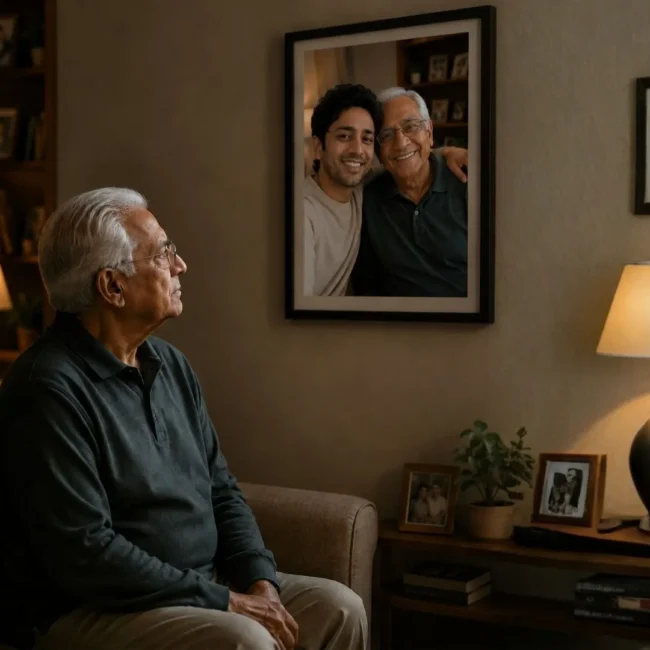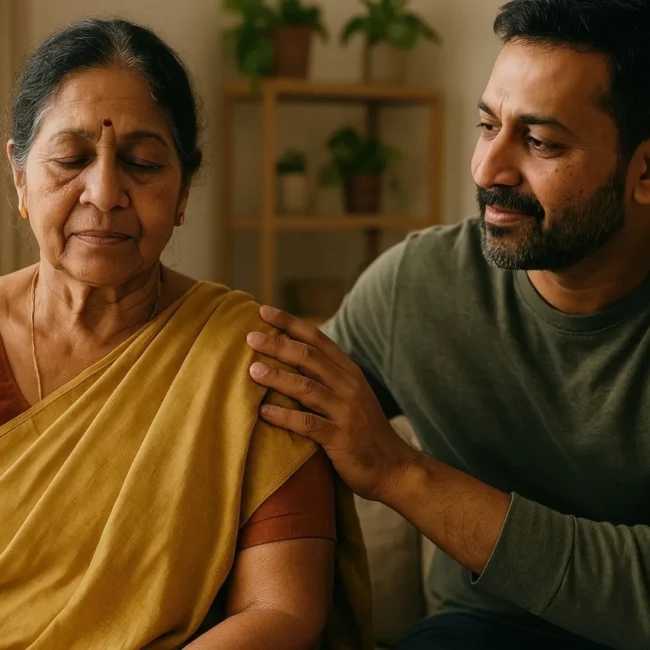
Your mother has started leaving the gas on. Not every day. But enough times that your father has quietly started double-checking after her. She laughs it off when you bring it up. Calls it forgetfulness. Says everyone her age does it.
Maybe she is right. Or maybe you have started noticing other things too. The keys were left in odd places. The same question was asked twice in one call. The slight hesitation before she remembers a name she has known for decades.
You are not ready to call it anything yet. But you know the home they have lived in for thirty years was not designed for this season of life. And you are sitting thousands of miles away, wondering how to make it safer, gentler, and easier to navigate. Without turning the place they love into somewhere that feels cold, clinical, or like a reminder of everything that is changing.
That balance is possible. And it does not require a full renovation or a medical-grade overhaul.
Why the Home Environment Matters More Than Most Families Realise
For elderly parents living with mild cognitive decline or early memory changes, the home is not just a place to live. It is the landscape their brain relies on for orientation, routine, and a sense of self.
When familiar things are where they expect them to be, the brain works less hard. When the environment is predictable, calm, and easy to read, daily functioning improves. Not because the memory has changed, but because the surroundings are doing some of the cognitive work.
The reverse is also true. A cluttered, confusing, or poorly lit home can accelerate disorientation. Too many visual distractions, inconsistent layouts, or hard-to-read spaces can leave a parent feeling anxious and overwhelmed in a place that is supposed to feel safe.
The goal of a memory-friendly home is not to medicalise the space. It is to reduce friction, increase familiarity, and make independence feel natural and achievable for as long as possible.
Why NRI Children Find This Particularly Hard to Navigate
When you live abroad, making changes to your parents’ home is a layered challenge. You cannot walk through the space yourself. You are relying on descriptions, photographs, and video calls that only capture so much. Your parents may resist changes that feel unnecessary to them, or that signal something they are not ready to acknowledge.
There is also the emotional dimension. The home you are trying to modify is the one you grew up in. Every room carries memory, not just for your parents, but for you. Suggesting changes can feel like dismantling something precious, even when the intention is purely protective.
And yet, the environment your parents live in every single day has a direct impact on their safety, their confidence, and their quality of life. Getting this right, even from a distance, is one of the most meaningful things you can do.
8 Ways to Design a Memory-Friendly Home That Still Feels Like Home
1. Start With Lighting. It Changes Everything
Poor lighting is one of the most common and most underestimated hazards in an elderly person’s home. Shadows create confusion. Dim corridors become disorienting at night. Bright, consistent lighting, especially in hallways, bathrooms, and the kitchen, reduces accidents and helps the brain read the space clearly.
Install motion-sensor night lights along the path from the bedroom to the bathroom. Replace dim bulbs with warm, bright alternatives. Ensure there are no dark corners in frequently used rooms. This single change costs very little and makes an enormous difference.
2. Reduce Visual Clutter Without Removing Meaning
A cluttered home is genuinely harder for a memory-affected brain to navigate. Too many objects, too many patterns, too many things competing for attention can create low-level anxiety that your parent may not even be able to articulate.
The solution is not to strip the home of everything that makes it theirs. It is to be selective. Keep meaningful objects, photographs, familiar decorations, things that carry emotional weight. Remove what is simply accumulated but no longer necessary. The goal is a home that feels curated and calm, not empty or unfamiliar.
3. Keep the Layout Consistent
One of the most disorienting things for someone with early memory changes is when things move. A chair that is usually in one corner, a medicine box that has been shifted to a new shelf, and a table that has been rearranged. These small changes can cause genuine confusion and distress.
Once a layout is established that works well, encourage everyone in the household, including domestic helpers and visiting relatives, to keep things exactly where they belong. Consistency in the physical environment is a form of cognitive support.
4. Use Labels and Visual Cues Thoughtfully
Labels on drawers, cabinets, and doors are one of the most effective memory aids available and they do not have to look institutional. Simple, clean labels in a clear font, in the language your parent reads most comfortably, can be both functional and unobtrusive.
Go further with visual cues where possible. A small picture of a toilet on the bathroom door. A label on the kitchen drawer that holds spoons. A note near the front door that says keys, phone, wallet as a gentle daily reminder. These cues reduce the cognitive load of navigating familiar but increasingly confusing spaces.
5. Make the Bathroom Safer Without Making It Look Medical
The bathroom is statistically the most dangerous room in the home for elderly adults. Wet floors, low toilet seats, and the absence of support handles create real fall risk. And a fall can be a life-altering event for an older parent.
Grab bars no longer have to look like hospital fittings. There are now beautifully designed options in brushed brass, matte black, and warm wood finishes that blend naturally into a well-designed bathroom. A non-slip mat in warm tones, a raised toilet seat in a neutral colour, and a shower chair that looks like a design choice rather than a medical necessity. These additions protect without announcing themselves.
6. Create a Dedicated, Predictable Spot for Important Items
Keys, spectacles, medicines, phones, wallets. The things that get lost are almost always the same. Create one designated spot for each of these, somewhere visible and easy to reach, and make it a consistent habit.
A small tray near the front door for keys and the phone. A pill organiser on the dining table at the place where your parent always sits. Spectacle cases are on the bedside table and on the television unit, the two places they are most likely to be needed. Predictability reduces the daily frustration of searching and the anxiety that comes with it.
7. Bring the Outside In
Research consistently shows that access to natural light and greenery has a measurable positive effect on mood and cognitive function in elderly adults. If your parents’ home has a balcony or garden, make sure it is accessible, comfortable, and inviting. A chair in the sun, a few familiar plants, a space that draws them outside naturally.
If outdoor access is limited, bring nature indoors. Low-maintenance plants, good natural light, and views of the outside world from frequently used rooms all contribute to a sense of calm and orientation. A home that feels connected to the natural rhythm of the day is easier for the brain to live in.
8. Address the Kitchen With Care
The kitchen is where the most common safety incidents occur for elderly parents living with memory changes. Left-on gas, forgotten pots, confusion about what has already been done. Automatic gas shut-off devices are now widely available in India and are a worthwhile investment. Induction cooktops, which eliminate open flame, are another option worth considering if your parent is open to the change.
Organise the kitchen so that the things used most frequently are at eye level and within easy reach, reducing the need to bend, stretch, or search. Keep the layout simple, consistent, and logical. And make sure the domestic helper understands that the organisation should never be changed without discussion.
Making Changes Without Making Your Parent Feel Like a Patient
This is perhaps the most delicate part of the entire process. Your parent has lived in their home for decades. It is the backdrop of their life, the place where they have always been competent, capable, and in charge. Suggestions for change, however well-intentioned, can feel like a verdict.
How you introduce these changes matters as much as the changes themselves. Frame them around comfort and convenience rather than safety and decline. “I thought this light near the bathroom door would be easier at night” lands very differently from “I am worried you will fall in the dark.” Both are true. Only one invites cooperation.
Make changes gradually, involve your parent in decisions wherever possible, and always anchor the conversation in love rather than fear. The goal is a home that feels better, not a home that announces that something is wrong.
How Samarth Helps NRI Families Create Safer, Warmer Homes
For children living abroad, assessing and modifying a parent’s home is something that is nearly impossible to do well from a distance. A video call can show you the living room, but it cannot tell you that the bathroom floor gets dangerously slippery after a bath, or that your mother has started avoiding the kitchen stairs because her balance has quietly shifted.
At Samarth, our care coordinators conduct thorough home assessments that look at the living environment through the lens of your parent’s current and anticipated needs. We identify risks that are not always visible in a photograph, recommend practical and aesthetically sensitive modifications, and help families implement changes in a way that feels supportive rather than alarming to the parent.
For NRI children, this means having someone on the ground who can walk through the space, speak with your parents with warmth and familiarity, and give you an honest, detailed picture of what needs attention and what can wait. We help you prioritise, plan, and act. Without you having to be there in person to do it.
Because keeping your parents safe in their own home, in a way that preserves their dignity and their sense of self, is one of the most important things a family can do. And you should not have to figure it out alone from the other side of the world.
Their Home Should Still Feel Like Theirs
A memory-friendly home is not a clinical space. It is not a place that announces limitation or signals the beginning of an end. Done well, it is simply a home that has been made a little kinder. One that works with your parent rather than against them, that reduces the small daily frustrations that accumulate into exhaustion, and that makes independence feel natural rather than effortful.
Your parents built that home into what it is. They filled it with decades of life, habit, and meaning. What you are doing, from wherever you are in the world, is making sure it continues to hold them well.
That is not taking something away. That is one of the quietest, most loving things you can do.