When you live abroad and your parents are in India, paying for their care can raise several questions. How do you send money to an elder care company in India? Will you receive bills in Indian Rupees or your local currency? How can you check where your money is being spent?
Most organised elder care companies in India have a payment and billing process for families living abroad. They share the cost of care in advance, provide payment details, and send bills or receipts after receiving payments. Any extra expenses, such as medicines, doctor visits, or hospital bills, are usually charged separately.
This allows NRIs living in the US, UK, UAE, Canada, Singapore, or Australia to pay for their parents’ care without having to visit India for every transaction.
How Do Elder Care Companies Receive Payments from Abroad?
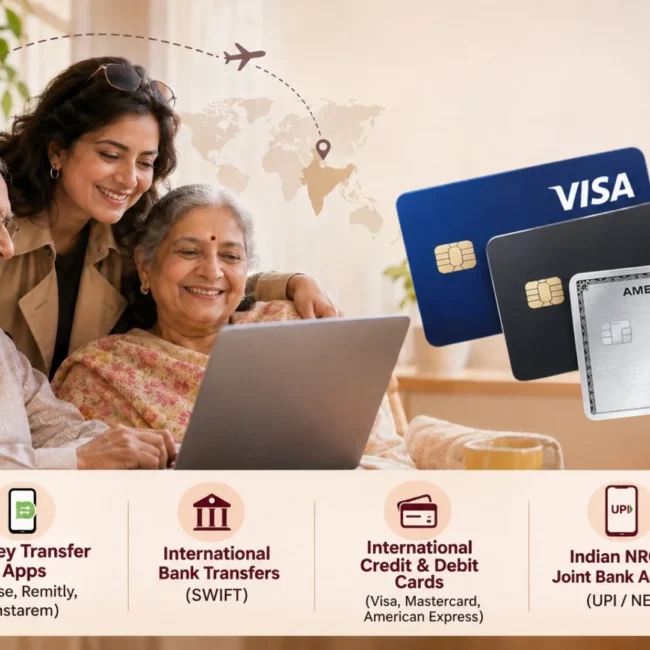
Elder care companies in India usually collect payments in Indian Rupees (INR). Families living abroad can send money through different payment methods, depending on what the company accepts. Here are four common ways to pay:
- Money Transfer Apps: Apps such as Wise, Remitly, and Instarem let you send money from your foreign bank account to an Indian bank account. The amount is converted into Indian Rupees before it reaches the company.
- International Bank Transfers (SWIFT): You can send money directly from your overseas bank account to the company’s bank account in India. This is useful for large payments or yearly care plans.
- International Credit and Debit Cards: Some elder care companies accept foreign Visa, Mastercard, and American Express cards through an online payment link. You can pay without visiting a bank.
- Indian NRO or Joint Bank Account: If you have an NRO account or a joint bank account with your parents in India, you can pay through UPI, NEFT, or net banking. NRIs in supported countries can also use UPI with their international mobile number linked to an NRO or NRE account. This is useful for monthly payments and urgent expenses.
Comparing Different Payment Methods
| Payment Method | Best Used For | Time Taken | Possible Extra Charges |
| Money Transfer Apps (such as Wise, Remitly, Instarem) | Planned monthly, quarterly, or yearly payments | Often minutes to a few hours; up to 1-2 working days for first-time or large transfers | Transfer fee and/or exchange-rate margin, which varies by app and country |
| Bank Wire Transfer (SWIFT) | Large payments or yearly care plans | 1-5 working days | Sending bank fee (often around $25-50 or equivalent), intermediary bank fees (often $10–30 per bank), a possible receiving bank fee in India, and your bank’s exchange-rate margin |
| International Credit/Debit Card (via payment link) | Quick online payments for monthly care plans | Usually instant | Foreign transaction fee charged by your bank (commonly 1%-3.5%). |
| Indian NRO / Joint Account (UPI/NEFT) | Emergency hospital payments, local bills, and regular monthly payments | UPI and IMPS are instant; NEFT is usually completed within a few hours | No currency conversion fee, as the money is already in India. |
Note: Transfer times and charges vary depending on your bank, country, payment service, and the amount sent. Weekends and bank holidays in either country can add delays, especially for SWIFT transfers. Always check the final amount and fees on your bank’s or app’s screen before you confirm.
How Does the Billing Process Work?
Paying an elder care company from abroad is not just about sending money. Families also need bills and payment records to keep track of their expenses. Most organised providers follow a process like this:
Step 1: Get the care plan: Before service starts, you receive the plan, monthly charges, and what’s included. Ask about any extra fees.
Step 2: Get payment details: Once you pick a plan, the company shares its bank details or online payment options. Pay from your overseas or Indian bank account.
Step 3: Pay through the invoice link: Every Samarth invoice carries a secure Cashfree payment link, so you can pay online by card or net banking. You then get a confirmation and receipt. Keep them for your records.
Step 4: Get separate bills for extras: Nursing, medicines, doctor visits, or hospital costs outside the plan are billed separately.
What Should NRIs Check Before Making Payments?
Before choosing an elder care company in India, check a few important details to avoid extra charges or payment delays.
- Ask for a written list of all charges: Get an agreement that clearly mentions the monthly fee and additional costs. Check for registration fees, caregiver replacement charges, holiday or festival charges, and cancellation or refund rules.
- Check which payment methods are accepted: Ask whether the company accepts international bank transfers, money transfer apps, or foreign cards. Also check whether your bank may charge extra fees.
- Ask for bills and payment receipts: Make sure the company provides a receipt after receiving payments and shares separate bills for additional services.
- Keep some money in an Indian bank account: International transfers can take a few working days. Keeping some money in an NRO or joint Indian bank account can help pay urgent hospital bills or medicine expenses without delay.
How Samarth Elder Care Handles Payments and Billing for NRI Families?
When you are living abroad, you should not have to keep calling different people to ask about your parents’ care expenses. You should have a clear picture of the services you are paying for and any additional costs.
At Samarth Elder Care, families can choose from clearly priced family care plans. The plan charges are shared in advance, so you can see what is included before signing up.
Samarth accepts international payments through secure Cashfree payment links included in every invoice. You can open the link from anywhere in the world and pay using an international Visa, Mastercard, or American Express card. If you are paying through an Indian bank account, you can use net banking or UPI through the same link. Once the payment is successful, you receive a payment confirmation and receipt. If you prefer an international bank transfer or a money transfer app, you can contact the Samarth team for the relevant bank details.
All family care plan charges and invoices are issued in Indian Rupees (INR). When you pay using a foreign card, your bank or card provider converts the amount into your local currency. The applicable exchange rate and any foreign transaction charges depend on your bank or card provider.
If your parents need additional services, such as nursing support, doctor visits, medicines, or hospital care, these expenses are separate from the family care plan. The charges for these services are billed separately from the regular plan fees. You can request details of the additional expenses and retain the corresponding bills and payment receipts to keep track of what you have paid.
This helps you distinguish between your regular family care plan charges and expenses incurred for additional services. If you have any questions about an invoice, additional charges, or payment options available from your country, you can contact the Samarth team for clarification.
Frequently Asked Questions
1. Can I pay an elder care company in India directly from my foreign bank account?
Yes. Many organised elder care companies like Samarth Elder Care accept international bank transfers and money transfer apps such as Wise and PayPal. Some also accept international credit and debit cards. You should check the available options with the company before making a payment.
2. How do I pay from abroad? What currencies do you accept?
Samarth accepts payments from abroad through international credit and debit cards (Visa, Mastercard, and American Express) using the Cashfree payment link on your invoice, international bank (SWIFT) transfers, money transfer apps, and payments from an Indian NRO or joint bank account through UPI or NEFT. All plans, invoices, and receipts are in Indian Rupees (INR). When you pay from another country, your bank or payment service converts your local currency, such as USD, GBP, or AED, into INR. The exchange rate and any foreign transaction fee are set by your bank or provider, so check the final amount before you confirm. Many NRI families find it convenient to keep funds in an NRO account and set up a recurring monthly payment through the Indian bank account.
3. How will I know where my money is being spent?
You can ask the care provider for itemised bills and payment receipts. These show the amount paid and the service or item for which the money was spent. Some companies also share expense updates through their mobile apps or email.
4. Are medicines, doctor visits, and hospital bills included in the monthly care plan?
Not always. Most care management plans cover regular care coordination and support. Medicines, doctor visits, lab tests, nursing services, and hospital bills may be charged separately. Check your plan before signing up.
5. Can elder care companies help pay my parents’ electricity, phone, and other bills?
Yes, we at Samarth help seniors pay electricity, phone, and property bills. They may also help with payments to domestic staff, such as cooks and drivers. Ask the company whether these services are included in its plan or charged separately.
6. Should I keep extra money in an Indian bank account for emergencies?
Yes. Keeping some money in an NRO or joint Indian bank account can help pay urgent medical bills, hospital deposits, and medicine expenses without waiting for an international transfer.