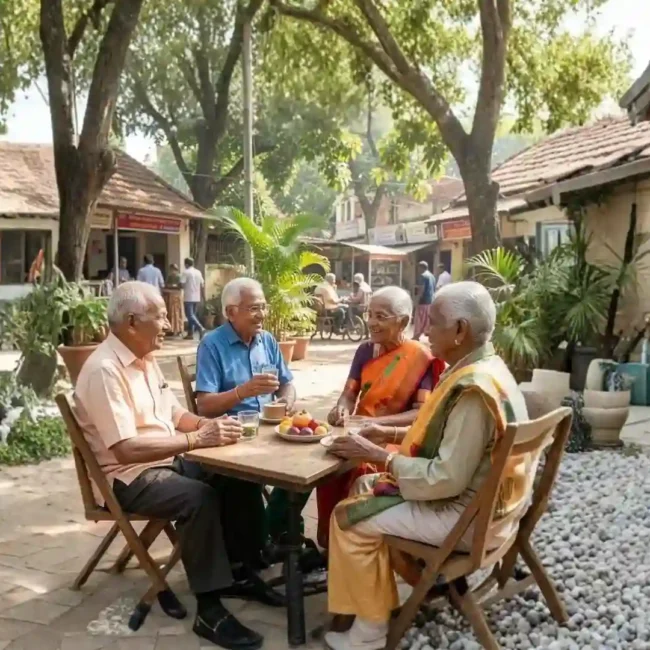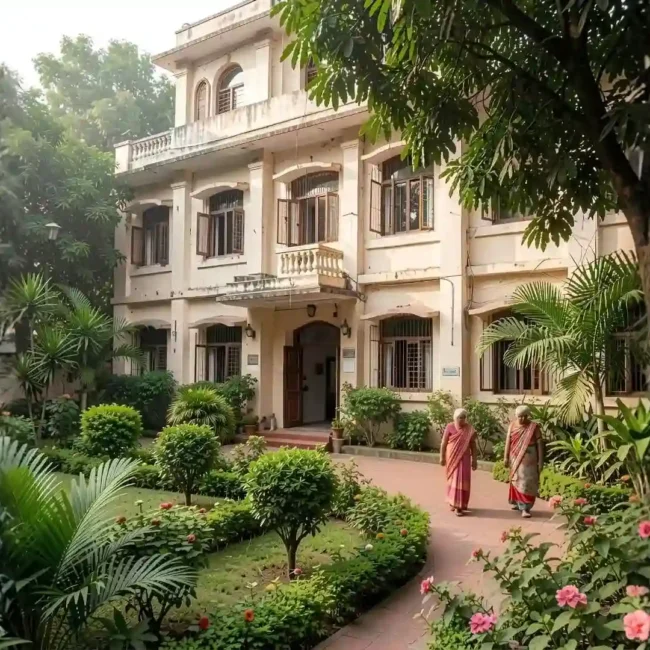
A family is looking at old-age homes in Delhi-NCR because they are not sure what else to do. Their parent is in South Delhi, Gurgaon, or Noida, and the situation feels like it needs a structural answer. But before comparing facilities, most families have not asked one question: does the parent actually want to move? And if not, is there a professional alternative that gives the parent everything an old-age home provides, without making them leave the place they have called home for decades? This guide covers both. The best old-age homes in Delhi NCR are covered here. So is the case for keeping your parent at home with professional support.
What Most Parents in Delhi NCR Actually Want
Research consistently shows that the overwhelming majority of elderly parents in India want to stay in their own home. Their own bed, their own kitchen, their own neighbourhood, the neighbours they have known for twenty years. An old-age home means a new place with strangers, new routines, shared spaces, and no sense of ownership over their own daily life. For many parents, especially those in Delhi NCR who have lived independently in their flat for decades, the move itself causes distress that can significantly worsen mental and physical health. Pride is also a real factor: for a generation that equates independence with dignity, moving into an old age home can feel like an admission of failure. This context matters because the right care decision has to be one the parent will actually accept, not just one that solves the family’s logistical problem.
Old Age Homes in Delhi NCR: What They Offer and What They Cost
The old age home Delhi NCR cost picture spans four broad tiers, and it helps to understand what each one actually includes before comparing options. Government and NGO homes run free to Rs 10,000 per month, offering basic accommodation and meals, although waiting lists are long and these are primarily meant for seniors without family or financial support.
They are generally not appropriate for NRI families seeking regular remote communication. Budget private homes cost Rs 15,000 to Rs 40,000 per month, with standard accommodation and meals under basic supervision, though quality varies significantly and requires an in-person evaluation.
Mid-range assisted living runs Rs 40,000 to Rs 85,000 per month and typically includes professional management, 24-hour nursing, activities, and medical monitoring.
Premium assisted living in Gurgaon and South Delhi ranges from Rs 90,000 to Rs 2,50,000 per month, with geriatric specialists, dedicated caregivers, and dementia programmes. Beyond the monthly figure, watch for one-time costs: a security deposit of Rs 50,000 to several lakhs, usually refundable, non-refundable admission fees, and separately billed items like medicines, physiotherapy, and specialist consultations. Location matters too, since Gurgaon and South Delhi carry a 15 to 25 per cent premium over Noida and outer Delhi for equivalent care.
Well-Known Old Age Homes and Senior Living Options in Delhi NCR
Here is a neutral look at established facilities across the region, without rankings or endorsements.
Premium Assisted Living
Antara Care Homes, part of the Max Group and operating across NCR, builds personalised care plans following a clinical assessment and offers rehabilitation, post-surgery care, and both short and long-term stays, without a fixed rate card. Aurum Senior Living in Gurgaon’s South City 2 follows a hospitality-first model, sits close to Medanta and Fortis, and provides structured updates for NRI families. The Golden Estate in Delhi offers both independent and assisted living options along with community programmes. Ashiana Senior Living in Bhiwadi, NCR, follows a CCRC model built around an active ageing philosophy, with 1 to 3 BHK apartments suited to the young-old, roughly 55 to 70 age group. This tier generally suits families with higher budgets or parents with complex medical needs requiring round-the-clock clinical support.
Mid-Range and Medical-Focus Facilities
NEMA Elder Care in Gurgaon is designed specifically for NRI families, with WhatsApp updates, video calls, and both short and long-term stays. Dua Old Age Caring Institution in Noida takes a medical-first approach, specialising in stroke, dementia, Alzheimer’s, paralysis, and post-ICU care. Olive Elder Care, with multiple NCR locations, offers full-range personal and medical care. These options make sense when a parent’s medical complexity genuinely requires institutional-level clinical oversight that home care cannot match.
What Old Age Homes Cannot Give Your Parent
An old age home, even a good one, cannot give a parent their own space. It cannot give them the morning routine they have had for forty years, the view from their own window, or the neighbours they have known since their children were in school. It places the parent in a shared environment with strangers and a schedule they did not choose. For many elderly parents in Delhi NCR, the adjustment to institutional living is itself a health risk. Depression, disorientation, and a loss of sense of identity are documented outcomes of forced relocation in late old age. This is not a dramatic claim. It is simply worth sitting with before assuming an old age home is the answer. The real question families should be asking is not which old age home is best, but whether an old age home is necessary at all.
Why Professional Home Care Is Usually the Better Answer
A managed home care service like Samarth provides everything a family worries about when considering an old age home: daily professional presence, clinical oversight from qualified nurses, medication and appointment management, emergency response, and structured updates to the family through the Samarth Care App. The parent gets all of that while staying in their own flat, in their own neighbourhood, in the environment where they feel safe and like themselves. As a home care alternative to old age homes in Delhi, Delhi families are increasingly considering it; the financial comparison often favours it too. Professional home care in Delhi NCR starts at Rs 12,000 to Rs 22,000 per month for companion care and scales based on medical needs, often resulting in a lower total cost than mid-range assisted living once deposits and one-time fees are factored in. The key question is clinical: if a parent’s medical condition requires 24-hour institutional-level care that a home environment genuinely cannot support, an old age home may be necessary. But that bar is higher than most families assume. For the majority of parents in Delhi NCR, professional home care is not a compromise. It is the better choice.
How to Evaluate Any Option: Old Age Home or Home Care
Start with the parent’s actual medical needs. Does the condition require 24-hour institutional clinical oversight, or can it be managed by a qualified nurse and attendant at home? Ask the parent directly what they want, and let that answer carry significant weight in the decision. If you are evaluating senior living Delhi NCR options, or comparing assisted living Delhi NCR facilities specifically, visit in person or arrange a proxy visit, request trial stays before committing, get an itemised cost breakdown including all separately billed items, and ask specifically about NRI communication protocols. For home care, verify caregiver credentials, ask about backup and replacement policy, confirm emergency escalation protocols, and set up structured remote monitoring from day one. In either option, treat these as red flags: cash-only payments, no written contract, vague answers about emergency handling, and no named point of contact for the family.
Conclusion
The best care decision is not the one that solves the family’s logistical problem from abroad. It is the one the parent will actually accept, that preserves their dignity and sense of self, and that can be trusted to work every day without the family needing to be present. For most families in Delhi-NCR, the answer is professional home care from a managed service like Samarth, not an old age home. For those families where an old age home is genuinely necessary, the framework above gives them a starting point. Your parent spent decades building a life in their home. The right care should let them keep it.
Frequently Asked Questions
How much does an old-age home cost per month in Delhi-NCR in 2026?
Costs range from free or around to Rs 10,000 at government and NGO homes, to Rs 90,000-Rs 2,50,000 at premium assisted living facilities in Gurgaon and South Delhi, depending on the tier and level of care.
Is home care cheaper than an old-age home in Delhi-NCR?
Often, yes. Professional home care starts at Rs. 12,000 to Rs. 22,000 per month for companion care. It frequently costs less overall than mid-range assisted living once security deposits and one-time admission fees are factored in.
Can I arrange admission to a Delhi-NCR old-age home from the US without visiting?
Some facilities, particularly those designed for NRI families, support remote evaluation through video calls and documentation, but an in-person or proxy visit is strongly recommended before committing.
What is the difference between assisted living and professional home care in Delhi NCR?
Assisted living places the parent in a shared facility with institutional staff and routines; on the other hand, professional home care brings qualified nurses and caregivers into the parent’s home to help them stay in a familiar environment.