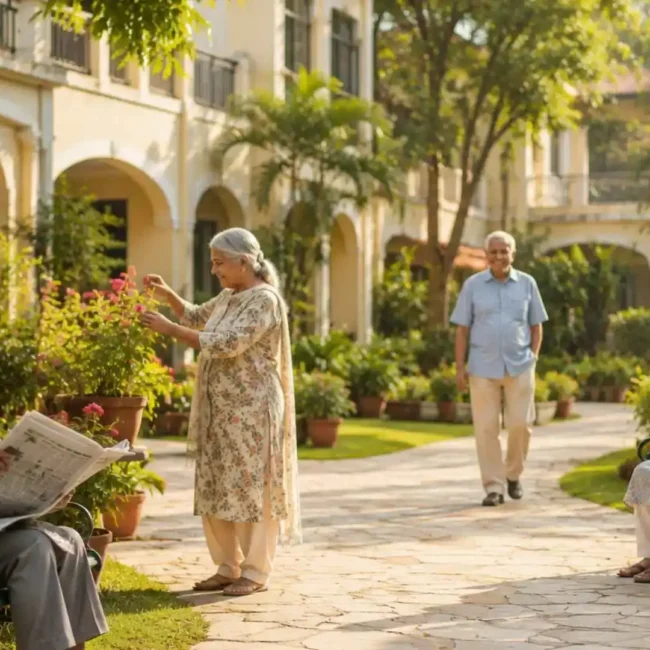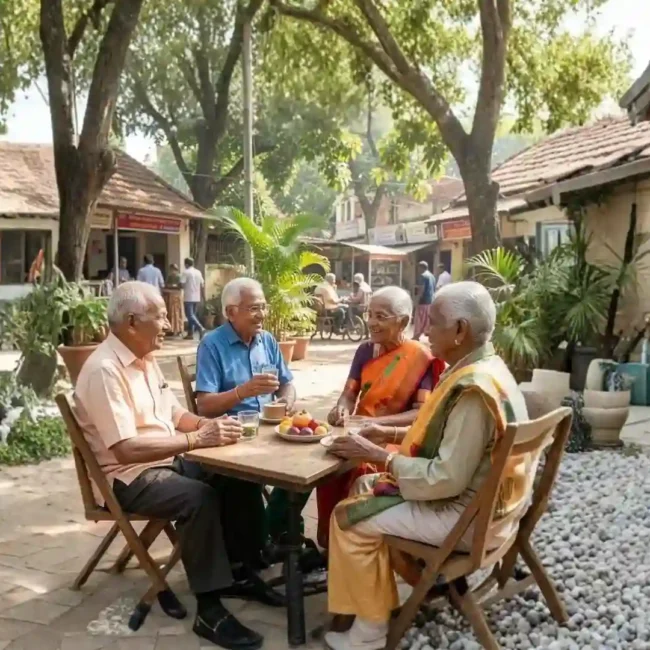
In Toronto, it is 11 PM. You just got off work. You open WhatsApp and see a message from your mum that she sent three hours ago. “Everything’s fine, beta.” But you saw that she didn’t call at her usual time. You try to call. No response. Your thoughts are racing.
This is the quiet worry that every adult child whose ageing parent lives alone in India feels in their chest. Not a big deal. A constant, low hum of worry that never really goes away.
More and more people in India are living alone after the age of 70, and it’s getting harder. This guide will help you understand the real risks and show you what a support system that is useful and keeps your dignity looks like.
Why Living Alone After 70 Is a Different Challenge Now
A generation ago, the joint family system made it so that older parents were rarely alone. That is no longer the case. Kids have moved to cities or other countries. There is less connection between neighbourhoods. Indian seniors often don’t want to ask for help because they were taught to be self-sufficient.
There is a gap that good intentions alone can’t fill. If you are old and live alone in India today, you have to deal with daily life without a steady person nearby. This includes taking medicine, getting around, eating, and dealing with emergencies.
This isn’t a problem with families. This is how Indian life is structured these days. And it has very clear, very easy-to-solve risks.
Physical Risks: Falls, Missed Medications, and Late Emergencies
It’s not just a guess that living alone in old age in India is dangerous. They happen a lot, but you can stop them if you have a plan.
Falls Are the Biggest Risk
If help doesn’t come within an hour, a fall in the bathroom or on a wet floor can be deadly. Older people who live alone often stay hurt for hours before anyone comes to check on them. The injury itself is not good. It’s worse because of the delay.
It’s very common for people to forget to take their medicine.
A lot of seniors over 70 take four, six, or even eight medications every day. Missing doses or taking them twice by mistake can cause serious health problems. These mistakes go unnoticed for days if no one checks.
Emergencies get worse without a first responder
A heart attack, a sudden fever, or a bad reaction to medicine can all be handled if someone acts quickly. Those first few minutes are lost when your parent is alone, and you’re in a different country. The risks of living alone for older people in India are not always the emergency itself. They are the ones who are late.
Emotional Risks: Being alone, feeling anxious, and losing cognitive function
The risks to your health are clear. The emotional ones are quieter, but just as bad.
Loneliness in older adults has been linked to faster cognitive decline, depression, and a measurable drop in physical health. When your parents’ world is just four walls and a TV, it hurts both their minds and their bodies.
A lot of older people in India don’t call it loneliness. They say they’re “fine”, so you won’t worry. But the signs are there: not wanting to eat, not moving around as much, forgetting conversations, and pulling away from friends.
Anxiety is another friend who doesn’t talk. Your parent might not say they’re scared. But the fear of falling alone or getting sick without anyone around becomes a part of their daily life and slowly makes them less willing to do things.
What a Structured Daily Check-In Actually Achieves
A daily check-in sounds simple. Its effect is profound.
When a trained person visits your parent each morning, confirming they have eaten, taken their medicines, and are feeling well, several things happen at once.
- Your parent knows someone is coming. That alone reduces anxiety and improves routine.
- Health changes are caught early, before they become emergencies.
- Medication adherence improves significantly when it is part of a witnessed routine.
- Your parent has a human interaction anchoring their day. This matters more than most families realise.
- You receive a reliable update. Not just a ‘fine, beta.’ Actual information.
For NRI families managing senior citizens living alone in India from abroad, this single intervention changes the quality of your own peace of mind, not just your parents’ safety.
Home Modifications That Reduce Risk Without Reducing Freedom
Your parent does not need to live in a hospital to be safe. Small, targeted changes to the home environment reduce the most common risks dramatically.
1. Grab Bars in Bathrooms and Near Stairs
Falls most often happen in wet spaces or on steps. A well-placed bar can prevent the fall entirely.
2. Non-Slip Mats on All Bathroom and Kitchen Floors
An inexpensive change that removes one of the highest-risk surfaces in the home.
3. Good Lighting in Corridors and Near the Bed
Night-time trips to the bathroom are a common cause of falls. A simple motion-activated light changes that.
4. Medicines Organised in a Pill Dispenser With Day-and-Time Labels
This takes the confusion out of a complex medication schedule and reduces errors significantly.
5. Emergency Contact Numbers on the Wall, Not Just in a Phone
If your parent is confused or panicked, they should not have to navigate a smartphone to reach help.
A Charged Mobile Phone Kept on Their Person or Within Easy Reach at All Times. The most common reason calls are missed is a phone left in another room. A simple habit saves critical time.
These are not changes that signal decline. They are the same common-sense adaptations that confident, independent people make to live well on their own terms.
The Role of a Care Companion vs a Nurse
Many families default to hiring a nurse when their parent starts living alone. But a nurse is not always what is needed, and the distinction matters.
A nurse is trained for medical care, including administering treatment, managing clinical conditions, and post-surgical recovery. If your parent has an active medical need, a nurse is the right call.
A care companion does something different. They provide daily presence, social engagement, medication reminders, meal support, accompaniment to appointments, and alert you when something seems off. They are not clinical. They are human. And for most seniors who are otherwise healthy but living alone, a care companion is exactly the right level of support.
The right support is the one that matches your parents’ actual situation, not the one that sounds most reassuring.
How Samarth Supports Independent Living for Elderly Parents in India
For children living abroad, the hardest part of elderly living alone in India is not knowing. Not knowing if your parent took their medicines today. Not knowing if they ate. Not knowing if the quiet on WhatsApp means everything is fine, or if something is wrong.
Samarth is built to close that gap, not by removing your parents’ independence, but by putting a trusted, trained person into their daily life.
- Daily in-person check-ins by a trained care manager who knows your parent by name
- Medication management and health monitoring, with alerts sent to you when anything changes
- Accompaniment to doctor appointments, laboratories, and pharmacies
- Regular updates to family members abroad, not generic reports, but real information
- Emotional engagement and companionship are a core part of the role, not an afterthought
- Home safety assessments and coordination of modifications when needed
For NRI families, Samarth is the on-the-ground presence you cannot be. The outcome is not just your parents’ safety. It is your own ability to breathe again.
Being Far Away Does Not Mean Being Absent
Your parents built their life with independence at its centre. That independence deserves to be protected, not erased the moment they turn 70, 75, or 80.
The goal of good support is not to take over. It is to quietly hold the edges so your parent can live fully in the middle.
You cannot always be there. But you can make sure someone who cares is.
Set Up Daily Support for Your Parent
If your parent is living alone in India, now is the right time to put a daily support system in place, before an emergency, not after.
Samarth’s care team works across Indian cities, providing trained, compassionate daily support tailored to your parent’s specific needs.
Talk to us today. Let’s build a plan that gives your parent the safety they deserve, and gives you the peace of mind you need.